

### Blog Post:
diy tools for math can make math lessons at home more engaging, affordable, and effective—even when traditional store-bought manipulatives aren’t available. Whether you’re a parent, teacher, or student, building hands-on math tools from everyday materials brings major advantages, but also comes with specific challenges to watch for.
Key Takeaways
- DIY math tools boost student engagement and help visualize tough math concepts, showing measurable improvement in test scores based on recent educational studies.
- Making your own manipulatives costs less and allows creative customization, but you need to avoid durability and accuracy issues.
- Start simple: Household items like bottle caps, LEGO® bricks, and cardboard can transform math learning at almost any grade level.
- The Core Concept: What Are DIY Tools for Math?
- Step-by-Step Guide: How to Make and Use DIY Math Tools
- Advanced Analysis & Common Pitfalls
- Conclusion & Next Steps
- FAQ: DIY Math Tools
The Core Concept: What Are DIY Tools for Math?
DIY math tools—sometimes called homemade manipulatives—are teaching aids made from everyday items like cardboard, bottle caps, popsicle sticks, or repurposed toys. These hands-on devices help students physically explore math ideas: counting, grouping, measuring, visualizing fractions or geometry, and more. Unlike digital apps or commercial sets, they’re budget-friendly, adaptable, and instantly available.
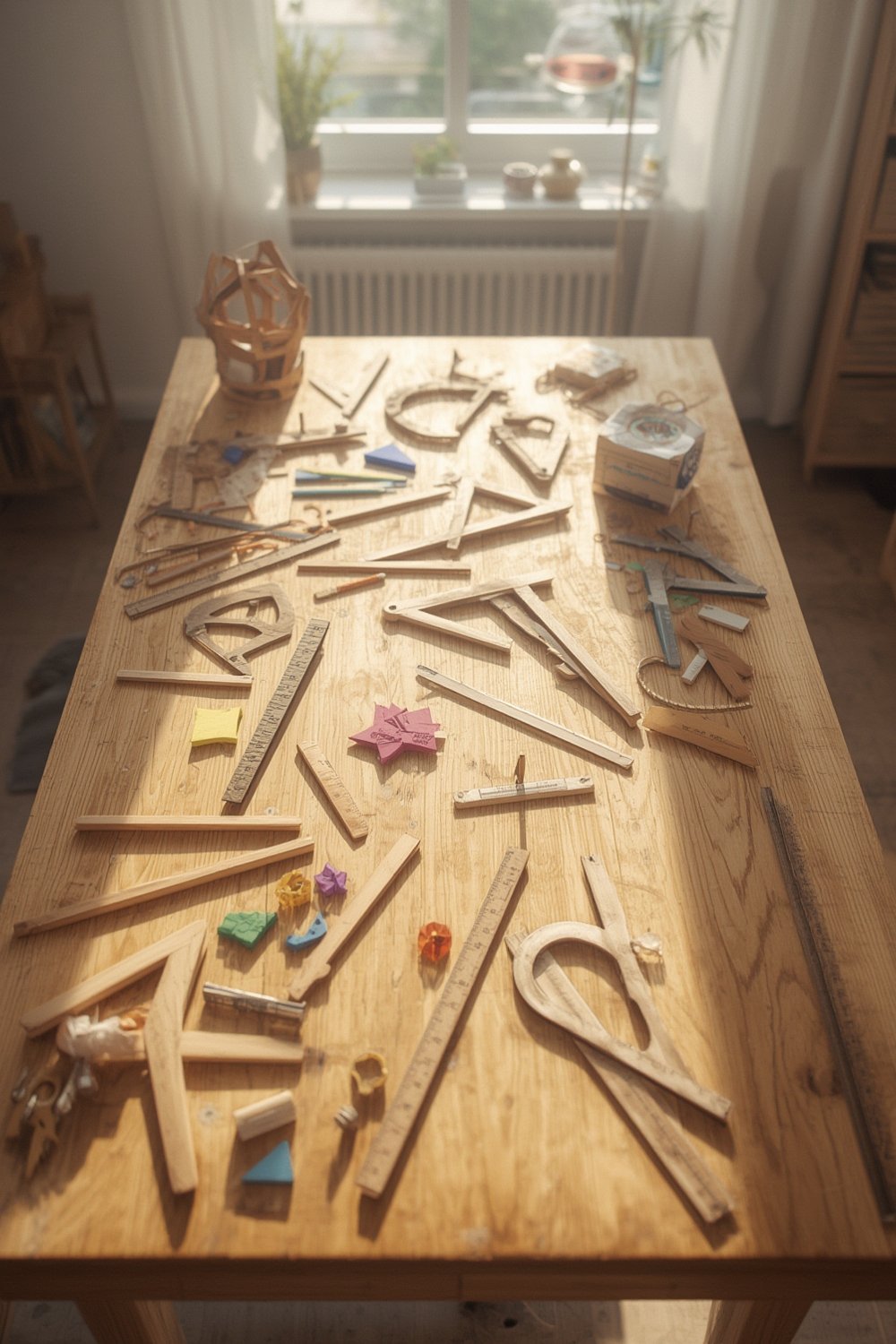
Numerous recent studies emphasize that concrete manipulatives—sometimes homemade—raise math achievement, particularly for students struggling with abstract concepts. For instance, a quasi-experimental study with Grade IV students reported substantial pre/post-test gains using “homemade manipulative materials”. Similarly, at-risk eighth graders working with LEGO® bricks saw statistically significant improvement in algebraic reasoning and test scores (source).
The bottom line: DIY math tools can help learners at all levels develop deeper, more practical math understanding—often with little or no extra cost.
Step-by-Step Guide: How to Make and Use DIY Math Tools
Want to get started making your own math manipulatives at home or in the classroom? Follow these practical steps for safe, successful, and effective results.
-
Identify the Math Concept
Pinpoint what concept you need to illustrate (examples: addition, subtraction, fractions, place value, geometry). For younger kids, start with counting or sorting; for older students, try measurement, area, or algebraic modeling. -
Choose the Right Materials
Look around your home for everyday objects: bottle caps (for counters), LEGO® bricks (for grouping/fractions), ice cube trays (for place value), cardboard (for geometric shapes), yarn (for measuring or patterning), and even coins or beans (as diverse counters). -
Design the Tool
Sketch your tool or look online for inspiration—many activities don’t need more than markers, scissors, and glue. For example, draw a number line on cardboard, create a hundred chart, or build a pie chart from colored paper segments. -
Construct Carefully & Safely
Use safe, age-appropriate tools. Scissors or glue should be supervised for young kids. If possible, pre-cut tricky shapes or hot-glue objects like bottle caps for sturdiness. -
Test with Real Problems
Let your learner use the manipulative on actual math problems. Observe if it clarifies the concept. Adjust or remake as needed—sometimes a tweak in color or size makes a big difference. -
Store for Reuse
Dedicated bins, zip bags, or old lunchboxes work well for keeping DIY tools organized and accessible for daily learning.

Feeling motivated? Explore other hands-on home projects—like kids science experiments at home—for more creative learning ideas.
Extra internal links for home improvement:
- Looking for the best tools to support your DIY projects? See our best cordless drill for home use guide.
- Manage those new DIY supplies with a Rubbermaid drawer organizer to keep your workspace clutter-free.
- Considering more permanent solutions? Our tips on organizing your kitchen pantry work for home classrooms, too.
Advanced Analysis & Common Pitfalls
While DIY math tools offer flexibility and cost savings, they do have real limitations. Here are common issues and professional insights drawn from recent educational research and years of home/classroom experience.
| Potential Issue | Explanation/Impact | How to Fix or Prevent |
|---|---|---|
| Tools Wear Out Quickly | Homemade items, unlike commercial sets, often degrade after days or weeks of classroom use. | Laminate paper, use sturdy cardboard, or reinforce with tape. Replace worn pieces regularly—it’s still cheaper than buying commercial kits. |
| Lack of Precision or Uniformity | Homemade counters, number lines, or shape cut-outs may vary in size or markings, causing confusion or math errors. | Measure and mark carefully, or print templates from reputable teaching resource sites. Encourage students to check each other’s work for accuracy. |
| Incomplete Concept Coverage | Some concepts—like 3D geometry—are tougher to represent with home materials, and the lack of tactile feedback from digital tools is an issue. | Combine different materials, or supplement with low-cost commercial tools or apps when needed. |
| Parental/Teacher Time & Setup | Making tools can take time, especially if attempting intricate designs or a classroom set. | Start with small batches—only make what you need. Involve learners in the process for both efficiency and educational value. |
| Missed Opportunities for Advanced Topics | More abstract topics (like algebra or advanced geometry) may benefit from hybrid tools (e.g., combining LEGO bricks with digital visualization). | Try integrating tools like LEGO®-based methods for advanced topics, or use online solutions specifically designed for math visualization. |
Current research supports the effectiveness of manipulatives for a range of learners. For example, studies have shown significant test score gains for lower and higher-achieving students alike when concrete or DIY materials are used (see study details). However, no analysis yet quantifies cost savings, expert material selection, or exact crafting times for DIY options.

If organizational efficiency is your focus, look for ways to integrate solutions like smart clean-up options alongside your creative learning space.
For more curated solution comparisons and reviews (from home improvement to educational aids), check out our top product picks and recommendations.
Conclusion & Next Steps
DIY math tools work for all ages and math levels, providing affordable, adaptable, and effective support that commercial products can’t always match. While you may run into issues with durability, precision, or time investment, the evidence is strong that homemade manipulatives, especially when student-built, measurably raise engagement and learning.
Start simple, focus on concepts that gain most from “seeing and touching,” and don’t be afraid to combine DIY and commercial or digital resources when needed. If you’re ready to transform math lessons at home, make your first set of diy tools for math tonight—and see the results in your next family’s math session!
Still have questions? Explore more at our product guide hub, or dive into more creative learning and home organization solutions here at Hearthside Picks.
FAQ: DIY Math Tools
What age groups benefit most from DIY math tools?
DIY math manipulatives help students from elementary grades (especially Grades 3-8) boost understanding, but even older learners can use them for visualizing advanced concepts like algebra or geometry.
Which household materials are best for building durable math tools?
Sturdy cardboard, plastic bottle caps, LEGO® bricks, beans, and coins make for versatile, durable manipulatives. Reinforcing paper with tape or lamination can also help homemade tools last longer.
Are DIY math tools better than commercial or digital manipulatives?
DIY tools are cost-effective and boost creativity, with studies showing math performance improvements. However, they may be less uniform or precise than store-bought tools, and complex concepts may sometimes need commercial or digital aids for best results.
How long does it take to make a set of DIY math manipulatives?
No definitive data exists, but simple tools (like counters or cardboard number lines) can take only minutes, while larger sets or precise models may require an hour or more. Involving kids can speed up and enrich the process.
How should I store DIY math tools for repeated use?
Use zip bags, bins, or small boxes to organize manipulatives by type. Keep the tools easily accessible to encourage frequent use and save time finding the right piece for each lesson.
—