

Portable heater technology has changed quickly, making it much easier to heat specific rooms efficiently without sky-high bills. With smarter features and tighter safety standards, today’s portable heaters are genuinely practical—but only if you know what to look for and how to avoid common mishaps.
Key Takeaways
- Modern portable heaters with programmable thermostats, programmable timers, and eco modes can cut operating costs by up to 23% compared to older models.
- Choosing the right heater type and using it in the correct room size helps avoid wasted energy, safety risks, and noise issues.
- Real-world savings vary by usage habits and electricity prices—smart features and zone heating make a dramatic difference.
- Understanding Portable Heaters & Why They Matter in 2024
- How to Choose & Use a Portable Heater: Step-by-Step
- Advanced Analysis & Common Pitfalls
- Conclusion
- Frequently Asked Questions
Understanding Portable Heaters & Why They Matter in 2024
Portable heaters are small, standalone devices that convert electricity into heat, typically delivering up to 1,500 watts—enough to warm areas of 150 to 200 square feet. Their biggest value for households is flexible zone heating: you only heat the rooms you use, cutting waste compared to a central system. In 2024, nearly all electric portable heaters promise “100% efficiency” in converting energy to heat. In practice, value comes from new features—thermostats, programmable timers, “eco modes,” and improved heat distribution—that slash operating costs, boost safety, and even extend lifespan.
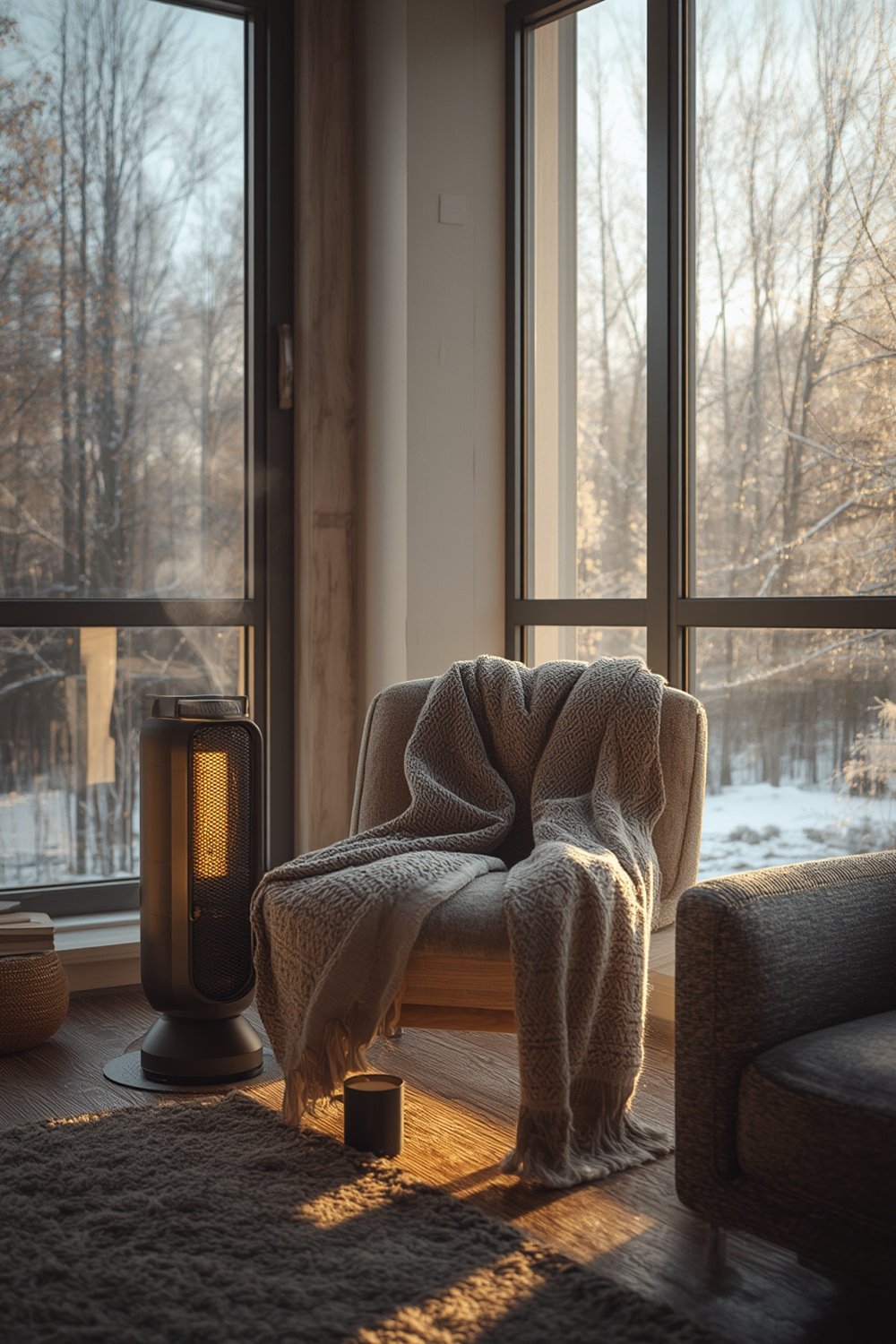
The shift to energy-efficient models (like ceramic and infrared) is accelerating. Market data shows portable heaters claimed USD 6,400 million in 2024 and are expected to grow at a 9.3% CAGR. Over 75% of new units in developed countries have some energy-saving certification or feature. Ceramic heaters, in particular, are booming because they warm rooms fast and cost much less to run than traditional resistance heaters.
Zone heating is not just about comfort. With U.S. electricity averaging $0.16-0.17 per kWh and utility rates rising in many states, switching to a modern portable heater for daily use can directly cut monthly energy bills. This makes them interesting not only for people in cold climates, but for anyone who wants to spend less on heating overall.
How to Choose & Use a Portable Heater: Step-by-Step
-
Measure Your Space.
Decide where you need supplemental heat. For insulated rooms, a rule of thumb is 10 watts per square foot. For example, a 150 sq ft room needs a 1,500-watt heater. -
Pick the Right Heater Type.
- Ceramic: Best for quick, efficient spot heating (urban, bedrooms, offices), strong safety features.
- Oil-filled: Slow but steady for long-term whole room warmth—great for bedrooms, nurseries, quiet areas.
- Infrared: Effective for “spot warmth (workshops, drafty spaces), offers instant heat but limited area spread.
- Fan: Good for fast heating, but can be noisier and less energy-efficient for long hours.
Consult comparison tables or unbiased reviews—such as in our best small space heaters guide—to match your needs.
-
Check Key Specifications.
Look for wattage (750/1,000/1,500W modes), digital or adjustable thermostat, tip-over and overheat shutoff, timer, and relevant certifications (Energy Star, ETL, UL). For example:- Vornado VH200: 1,500W, quiet, covers 200 sq ft, versatile safety modes.
- De’Longhi TRD40615T: Oil-filled, 3 heat settings, timer, thermal cutoff.
- Lasko 754200: Budget ceramic, 750-1,500W, adjustable thermostat.
For more in-depth comparisons, see our roundup of top product picks and recommendations.
-
Prioritize Safety Features.
Only buy models with tip-over shutoff and overheat protection. Look for units with a cool-touch exterior, especially if you have pets or children. -
Use Smart or Timer Functions.
Take advantage of smart heaters or app scheduling to schedule operation, track usage, and cut costs by up to 30%. Basic programmable timers are the minimum to avoid letting the heater run unattended all day. -
Calculate Your Cost.
Multiply the heater’s wattage by hours used and your local kWh rate for a real estimate. Example: 1,500W × 8 hours / 1,000 × $0.17 = $2.04/day in an average U.S. state (source). -
Place Your Heater Safely.
Keep heaters away from curtains, bedding, or flammable materials. Position on a hard surface—not carpet. Always plug directly into a wall outlet (never an extension cord).
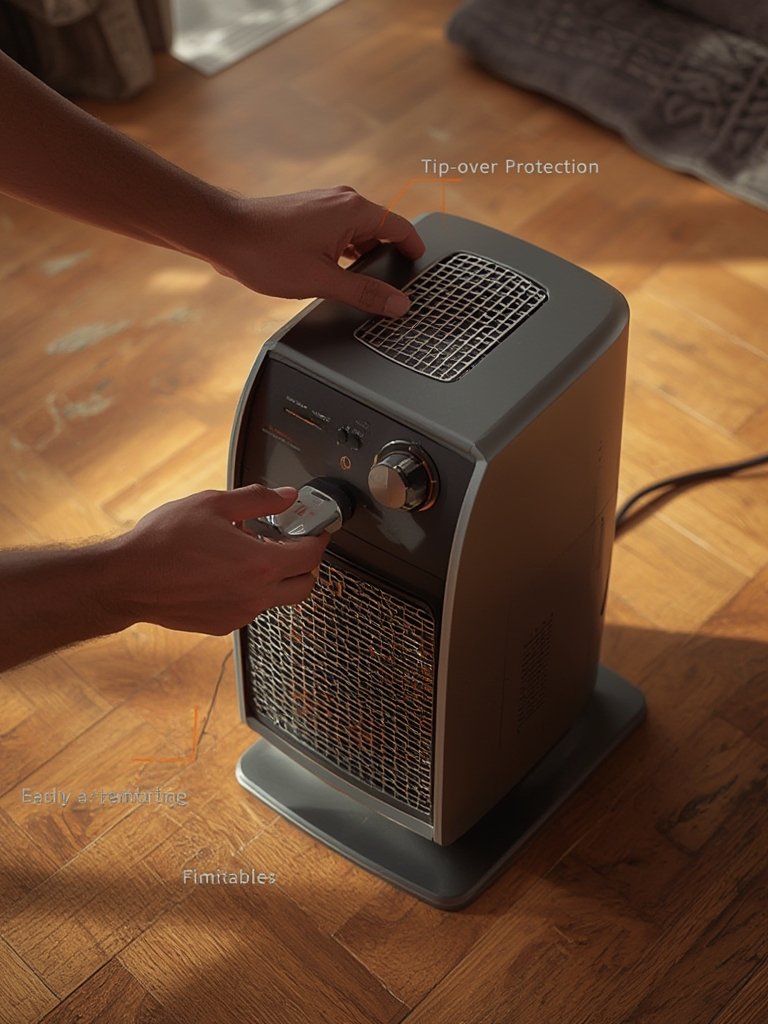
Many users overlook key maintenance tips: clean intake grilles regularly to prevent dust buildup (see our fan cleaning guide), and store heaters dry and upright in the off-season.
If improving energy usage throughout the home is your broader goal, check out smart savings upgrades like smart thermostats and weather stripping for drafts—our weather stripping guide can help.
Advanced Analysis & Common Pitfalls
It’s easy to see why portable heaters are more popular than ever, but most people miss major downsides in daily use. Here’s what often goes wrong, and how the leading types compare:
| Type | Energy Efficiency | Safety Features | Market/User Notes |
|---|---|---|---|
| Oil-filled | Exceptional for even, sustained room warmth (18% fewer cycles than ceramics). Slow start and lingering heat long after switch-off. | Extremely stable; thermal cutoff is standard but unit stays hot after shutting down. | Highly rated for quiet operation and steady temps; bulky and heavy, so less portable. |
| Infrared | Spot/zone heating is highly efficient, no energy wasted warming unused air. Not ideal for large rooms or open layouts. | Most have tip-over protection and remote shutoffs. | Instant warmth, popular for garages/offices. Heat fades quickly if people leave the beam. |
| Ceramic | Rapid, focused heating at lower consumption for small/medium spaces. “Eco mode” cuts bills up to 23%. | Overheat & tip-over shutoff mandatory in 2024 certified models. | Dominates home use (58% of market). Lightweight, affordable, but can be noisy. |
| Fan | Fastest heating but can be less efficient in big rooms or for extended use. | Major improvements recently; now required to have safety shutoffs. | Preferred for short-term, high speed warming—fans still make up 32% of U.S. market. |
- Noise complaints: Older models and fast fan-based types can rattle, hum, or emit a high-pitched sound (urban apartments, especially). Most 2024 models are quieter, but check decibel ratings if you’re sensitive to noise.
- Safety recalls: Skipping safety features (buying the cheapest online model) is risky. Only choose units with modern safety certifications (UL/ETL).
- Electricity costs: Underestimating usage time is common. Four hours daily can double your bill in high-cost electricity regions unless you use smart scheduling or occupy smaller zones.
- Lifespan/durability: Cheap or unbranded heaters often fail (breakdown, thermal fuses blowing) far sooner than established models—warranties matter.
- Inefficiency from drafts: Portable heaters lose effectiveness fast if used in leaky, uninsulated spaces. Prep with basic sealing, or your heater runs endlessly.
Real case studies confirm the difference smart controls make. The Vornado VH200 in a 150 sq ft office used 23% less power than basic ceramics. Smart WiFi models like the Boldr Kelvin WiFi Heater, with app scheduling and geofencing, cut bills up to 30%—but only if you enable those features. (details)
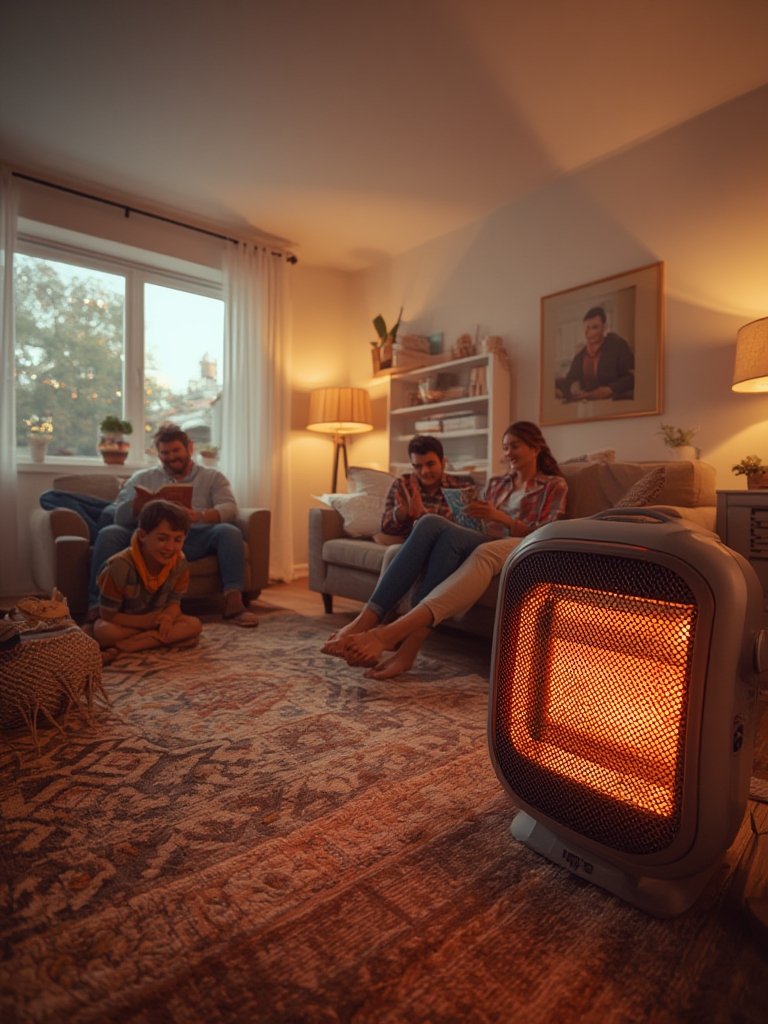
For truly even warmth and lowest energy waste, proper room sizing and regular maintenance beat any single “most efficient” model. Remember: even the best portable heater can’t overcome poor usage habits or ignored drafts. For smart cleaning and longevity, you might also like our care advice for new machine-washable rugs or our ongoing home improvement product picks.
Conclusion
Portable heaters have made huge advances in safety, energy efficiency, and smart programming. Even so, choosing the wrong type or ignoring usage best practices quickly eats up any potential savings. If you want risk-free comfort and real utility bill savings, choose the right portable heater for your specific space, use timers and smart features, and combine with good old-fashioned draft proofing.
The portable heater is still the fastest, most flexible way to warm specific rooms in 2024. Take action today—measure your room, compare feature sets, and enjoy targeted comfort while ensuring lower energy bills.
Frequently Asked Questions
How much does it cost to run a portable heater for 8 hours?
At the U.S. average rate ($0.16–$0.17/kWh), a 1,500W portable heater costs about $1.92 for 8 hours. Costs are lower in regions with cheaper electricity and higher where rates exceed $0.20/kWh.
Which portable heater type is safest for overnight use?
Oil-filled radiators are generally the safest for overnight use, as their surfaces don’t get red-hot and they continue to release heat gently after switch-off. Always look for heaters with tip-over and overheat shutoff.
Are smart heaters worth the extra cost?
Yes, if you actually use their features. App scheduling, geofencing, and timers can reduce energy use by up to 30%. If you only need a few hours of heat, even a basic programmable model is a big improvement over manual heaters.
How can I reduce noise from my portable heater?
Newer ceramic and oil-filled models are much quieter. Place the unit on a hard, flat surface, keep it clean, and avoid cheaper, fast-fan heaters if noise is a concern. Always check decibel ratings in product specs.
Will a portable heater work in a poorly insulated room?
It will, but you’ll burn through much more electricity. For drafty rooms, seal gaps first with weather stripping and use the portable heater strategically—otherwise, heat escapes faster than it’s produced.