

Pegboard drawer organizer systems are one of the most popular ways to keep deep kitchen drawers tidy, but the user experience is far from perfect. In this guide, you’ll get a realistic view of which pegboard organizers work best, key technical details to consider, step-by-step installation advice, cost comparisons, and honest pros and cons.
Key Takeaways
- Pegboard drawer organizers excel at customizable storage but have real limitations for heavy loads and long-term durability.
- Careful product selection and fit adjustment are crucial—expect to trim or hack most commercial units for best results in your kitchen.
- Alternatives like Traditional Dividers offer better reliability for heavy cookware, but pegboards are more flexible for changing needs.
The Core Concept
A pegboard drawer organizer turns a deep, unruly cabinet into a flexible system for storing dishes, bowls, lids, and pans upright—using a grid plus pegs that can be rearranged as your needs change. This approach prevents shifting when you open and close drawers, a major problem with standard plastic bins or fixed dividers. Unlike traditional kitchen dividers, pegboards can be trimmed to fit odd-size drawers and reconfigured repeatedly, making them especially popular with cooks who reorganize often or upgrade their cookware.
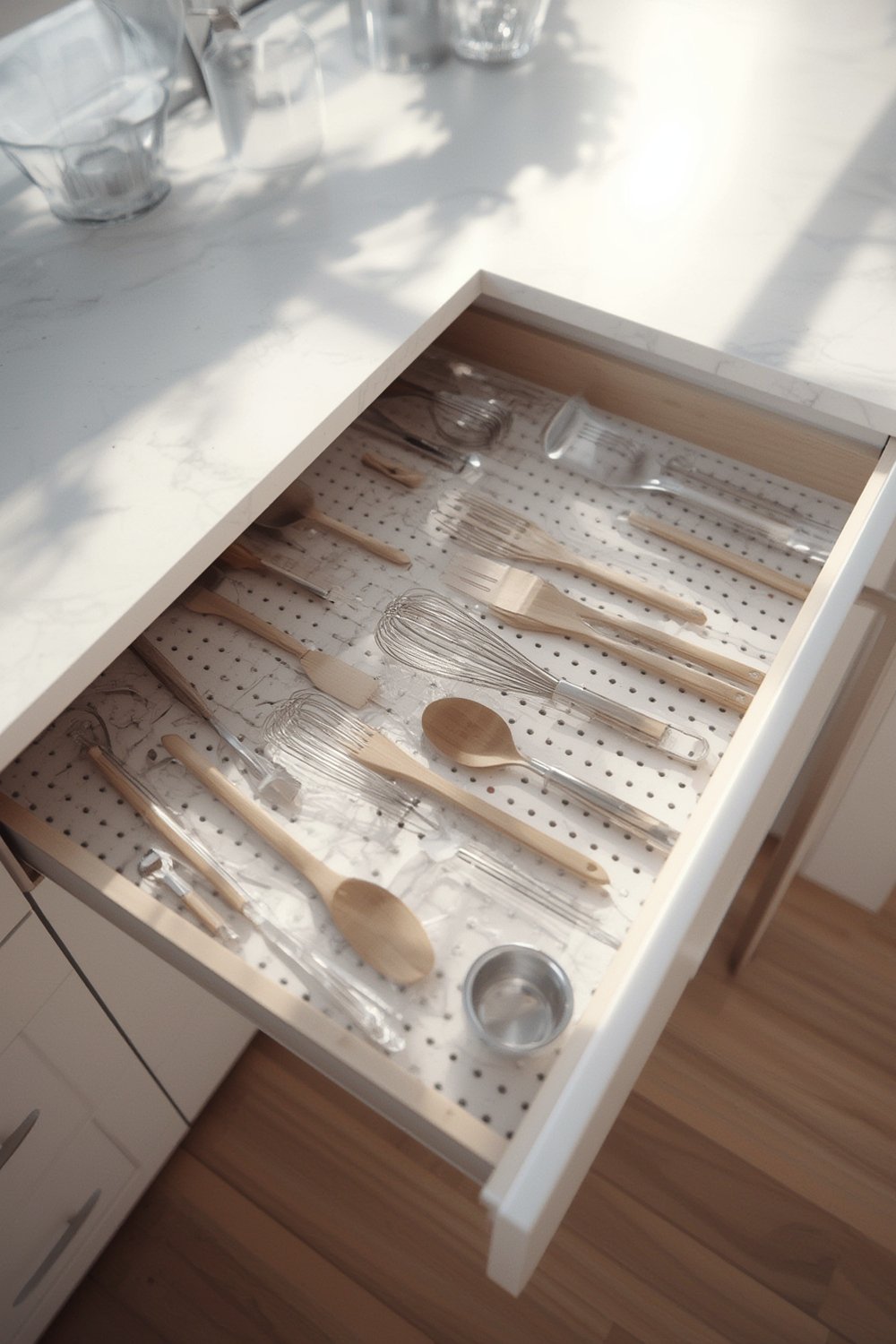
The core idea has expanded—brands like IKEA’s UPPDATERA and Rev-A-Shelf offer kit-based options, while custom woodmakers build premium inserts from maple and walnut. DIYers have also designed clever solutions using scrap pegboard, dowels, and sliding mechanisms.
Pegboard organizers are appealing for kitchens, pantries, and occasionally garages (though peg reliability can be an issue in garage setups as discussed here), but they are best suited for arranging lightweight or medium-weight items.
Step-by-Step Guide
- Measure Your Drawer. Accurately measure the internal width, depth, and height of your drawer. Many kits are not true to the package size (IKEA’s organizer, for example, is labeled 30″ but actually spans just 25″ internally).
- Select a Pegboard System. Compare mass-market (IKEA, Rev-A-Shelf), premium custom (Neatshop), or plan a simple DIY system using scrap wood—about $10 for materials.
- Test Fit and Cut to Size. Most systems require trimming. Use a fine-tooth saw for plastic or wood bases. For best results, cut just under your measured width, allowing room for slider mechanisms or drawer walls.
- Install the Base. Place or secure the pegboard flat in the drawer. For sliding systems, attach to wooden glides or shims using wood glue and screws.
- Insert Pegs and Arrange Items. Start with pegs spaced generously. Place cookware, dishes, or lids upright and adjust pegs as needed for a snug fit (traditional 1/4″ pegs fit most holes tightly).
- Refine Layout. Move pegs or add more for different item sizes—bowl stacks, plate rows, pan lids. Use a variety of peg heights if available for better support.
- Maintenance and Peg Replacement. Source spare pegs (many users complain about breakage—see IKEA reviews). Clean regularly with a damp cloth and mild soap, especially if storing food-contact items.
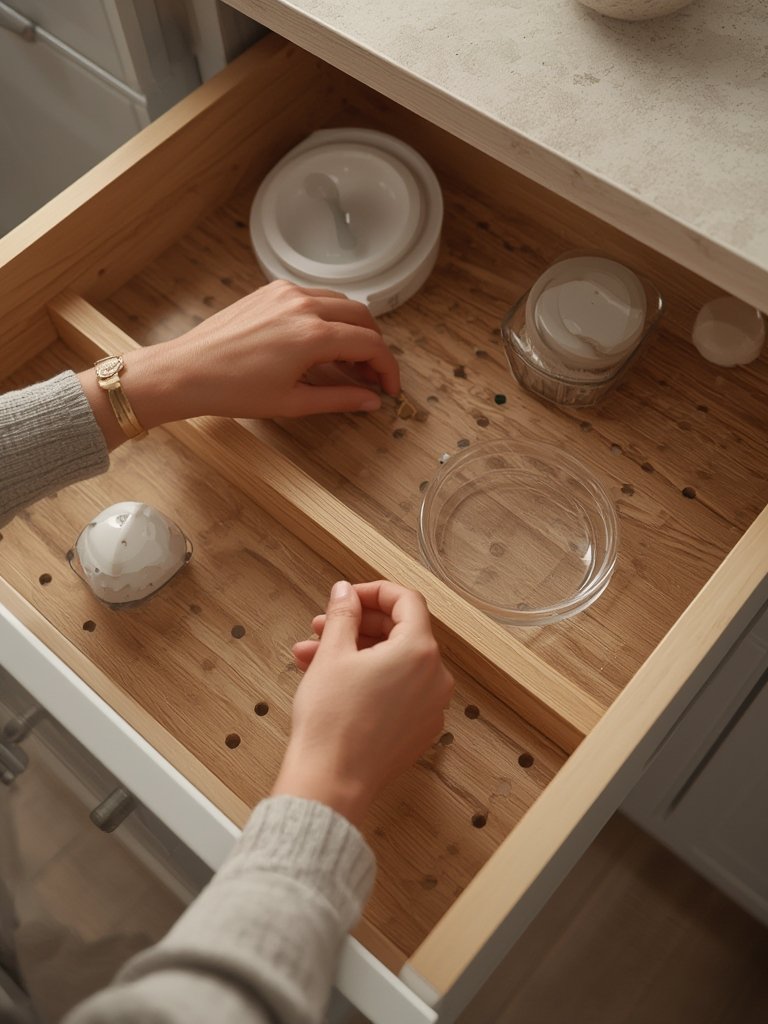
If you want a sliding organizer for easy access, mount the pegboard to a wood frame paired with side glides (e.g., using furring strips and shims). This simple DIY solution often outlasts commercial plastic options if you use hardwood dowels for pegs.
For more kitchen organization inspiration, visit our pantry organizing guide or see why flexible Rubbermaid drawer organizers sometimes outperform pegs for lightweight, high-frequency items.
Advanced Analysis & Common Pitfalls
Pegboard drawer organizers are smart in theory, but users face several recurring issues. Here’s an honest, research-backed breakdown of what can go wrong, along with a side-by-side comparison to traditional drawer dividers:
| Organizer Type | Best For | Pain Points | Estimated Cost |
|---|---|---|---|
| Pegboard Organizer (Plastic, e.g. IKEA) | Customizable bowl/dish layouts, quick reorgs | Pegs break under >10” pans; true width smaller than labeled; multiple packs needed to fill large drawers; pegs may pop loose or lose grip over time | Low ($20-40 for large drawers using two kits) |
| Pegboard Organizer (Custom Wood) | Premium kitchens, food-safe, aesthetics | Higher cost, no published ratings, 14-day lead times, harder to DIY repair, peg compatibility issues | Premium (request quote) |
| Pegboard Organizer (DIY) | Budget solutions, easy fit tweaks, sliding drawers | Time-consuming; pegs may slip with thin board; requires basic woodworking tools | ~$10 in materials |
| Traditional Dividers (Plastic/Wood) | Heavy-duty pots, pans, static storage | Fixed spacing, not adjustable, less efficient use with mixed size items | Low to moderate ($15-60) |
- Peg durability: Reviews reveal frequent breakage, especially with metal cookware, deep bowls, or items over 10″ wide. Most pegs are molded plastic and require replacement pegs every few months (read user complaints).
- Misleading dimensions: IKEA’s “30-inch” unit measures only 25” internally, causing fit headaches and wasted space if you don’t check specs carefully.
- Install headaches: Expect to cut, trim, or buy multiple packages for large drawers. Commercial pegs may fall out with repeated use or heavy loads.
- Load limits: Most pegs cannot support cast iron or large stainless pans. Stick with smaller glassware or Tupperware. Traditional dividers, by contrast, can be sturdier.
- Long-term maintenance: Finding spare pegs can be difficult outside of original kits. For food-safe use, clean regularly to prevent residue and dry completely before use, especially with wood surfaces. Plastic pegs and boards may degrade from heat or moisture exposure.
- Peg compatibility: Hole spacing is not always standard—trial and error fitting is the norm, especially when mixing brands or buying aftermarket pegs.
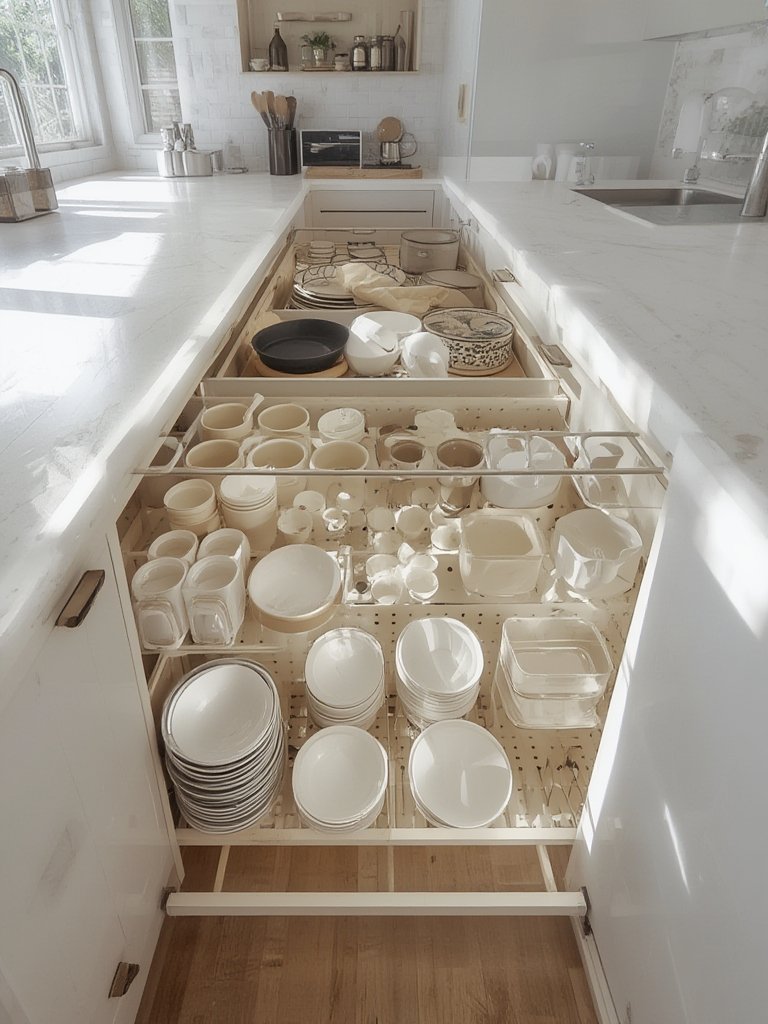
Garage settings add unique challenges. In high-load or vibration-prone environments, pegboard organizers often fail, leading tool users to prefer plywood or heavy-duty shelf brackets.
Looking for more reliable organization? Explore custom closet solutions or see what makes a top organizing product pick in our expert-reviewed directory.
Conclusion
Pegboard drawer organizer kits offer huge flexibility for kitchen organization and make frequent reconfiguring a breeze, but they are not a perfect universal solution. Real-world feedback shows they excel for lightweight and mid-weight items, but struggle with heavy-duty cookware and long-term peg durability. Always measure carefully, plan for trimming, and expect to replace pegs over time. If you’re looking for the most customizable solution for changing storage needs, the pegboard drawer organizer is still tough to beat—just stay realistic about its limitations. Ready to organize your kitchen drawers? Start with accurate measurements and don’t hesitate to modify your system for best results.
FAQ Section
How much weight can a pegboard drawer organizer hold?
Most commercial kits support glass bowls, plates, and lightweight plastic containers. They usually fail under very heavy loads (over 10″ pans, cast iron), causing pegs to break or slip out. Stick to lighter kitchenware for best results.
Can I make a pegboard drawer organizer myself?
Yes. A simple DIY project costs about $10 using scrap pegboard, dowels, and wood strips for slides. This approach is easy to customize but does require cutting and basic woodworking tools. For more durability, consider using hardwood dowels as pegs.
Do I have to cut the organizer to fit my drawer?
In most cases—yes. Commercial kits are often smaller than drawer width (e.g. IKEA’s is 25″ internal for a “30-inch” package), so trimming or combining multiple pieces is common. Always measure carefully before buying or modifying.
Where can I find replacement pegs?
Some kits include extras, but replacements can be difficult to find unless ordering from the original manufacturer. Users sometimes substitute standard 1/4″ hardwood dowels cut to length for stronger, longer-lasting pegs.
What’s better: pegboard organizers or traditional drawer dividers?
For flexibility and regularly changing layouts, pegboards are outstanding. If you need to store heavy cookware or want a maintenance-free system, traditional (fixed) dividers perform better in the long run.