

Mens bathroom organizer solutions are more important than ever as living spaces get smaller and bathroom clutter becomes tougher to control. If shaving kits, body wash, and random gadgets always seem to take over your sink, you’re not alone—smart organizing is essential for both functionality and sanity.
Key Takeaways
- The global bathroom organizer market is projected to reach over $27 billion in 2024, driven by demand for smart, space-saving storage (source).
- There are no truly men-specific organizer products or design innovations—multifunctional, compact, and customizable options work for every bathroom.
- The biggest pain points are limited space and lack of durable solutions for shared or small bathrooms, not style or gender.
- What Is a Mens Bathroom Organizer (and Why You Need One)?
- Step-by-Step Guide to Organizing Your Bathroom
- Advanced Analysis & Common Pitfalls
- Conclusion
- Frequently Asked Questions
What Is a Mens Bathroom Organizer (and Why You Need One)?
A men’s bathroom organizer refers to any system or set of storage tools designed to keep toiletries, grooming tools, and daily-use items in order—especially in compact, often-shared bathroom spaces. While there are endless “bathroom organizer” products, there aren’t any with features built specifically for men, according to leading bathroom organization market reports.
Most standard organizers solve the same universal problems: not enough storage, messy countertops, and wasted time searching for essentials. The global bathroom organizer market has grown to $27.4 billion in 2024, with a 5.8% CAGR projected through 2033 (see source), highlighting a huge demand for functional, space-efficient solutions—regardless of gender.
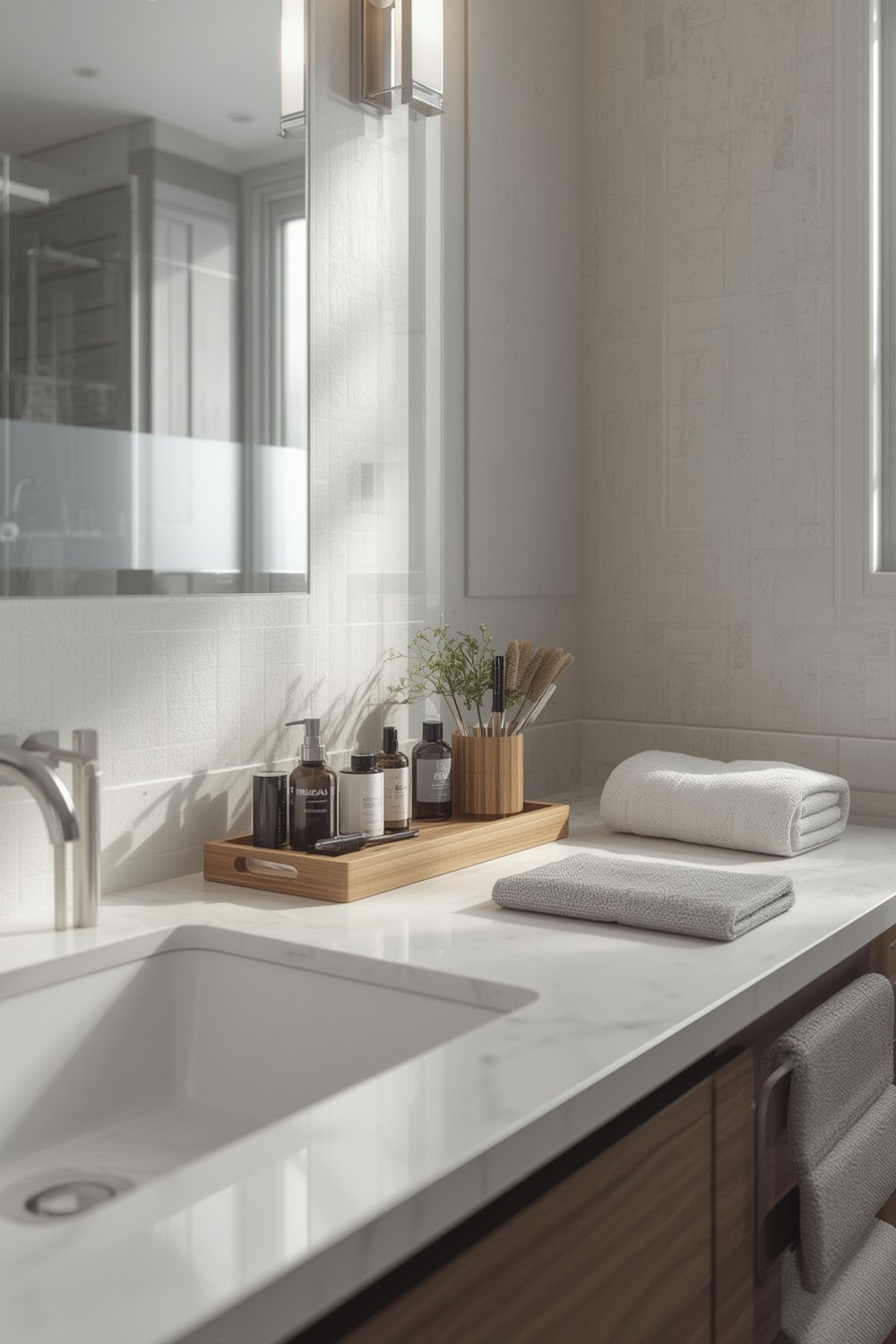
For men in apartments or shared homes (think college roommates, couples, or gym showers), choosing the right organizer can mean the difference between morning chaos and an efficient, streamlined routine.
Prioritizing durability, easy access, compact design, and—if the bathroom is shared—hygiene, is the most practical route. Commercial spaces like gyms often use antimicrobial finishes for high traffic and easy cleaning, and many e-commerce organizers now offer some form of customization (see reference).
If your interest lies in broader home improvement, be sure to check out other actionable guides like the Garage Cabinets Buying Guide or the popular Top Product Picks and Recommendations to optimize other areas of your home.
Step-by-Step Guide to Organizing Your Bathroom
No matter your living situation or storage needs, follow these realistic, actionable steps to maximize the usefulness of any mens bathroom organizer, even in small or shared bathrooms.
- Audit your current space. Take everything out. Clean all surfaces. Assess what you actually use.
- Group by function. Create zones for hair, face, body, and grooming gear. This will help you select the best organizer or combination of tools.
- Pick the right organizer. For limited sink space, opt for a wall-mounted shelf or over-the-toilet rack. drawer organizers or caddies work for those needing hidden storage. Consider stackable bins in open cabinets for small bathrooms.
- Customize for your daily flow. Organize from left to right or top to bottom, matching your morning routine. Place most-used items at eye level or easy reach. Less-used products stay higher, lower, or further back.
- Use commercial tricks for shared bathrooms. If you share with roommates, color code bins or choose antimicrobial, easy-to-wipe caddies as seen in high-traffic gyms (market insight).
- Consider modular or DIY organizers. Modular drawer organizers, e-commerce DIY systems, or even repurposed small toolboxes (like those for drill bits) let you fine-tune to any configuration.
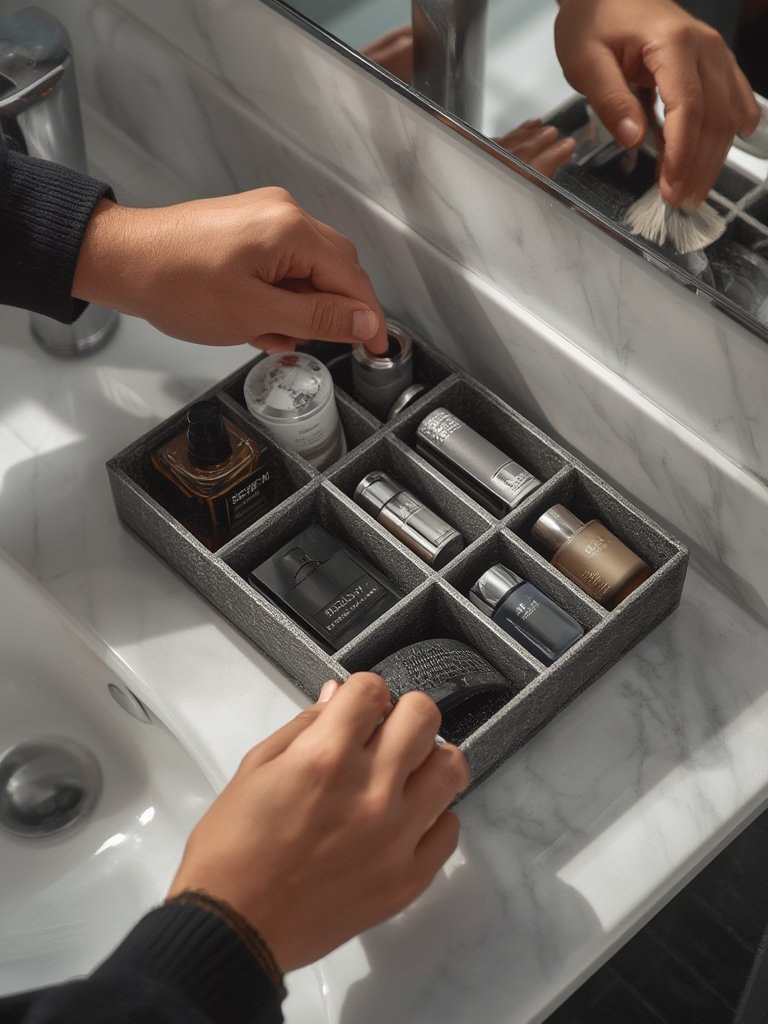
Bonus: Multifunctional organizers save space by combining hooks, shelves, and bins in one compact piece—a top trend noted for 2024. Touchless and antimicrobial features, though geared toward commercial use, are slowly reaching home markets.
Explore Rubbermaid drawer organizer tips for maximizing drawer space and closets by design planning to expand storage beyond the bathroom.
If you need organizing ideas for the rest of your home, check out the kitchen pantry organization guide for spillover solutions.
Advanced Analysis & Common Pitfalls
Despite the market size, real-life users routinely face several snags when tackling bathroom organization—especially without dedicated “men’s” solutions on the shelves or in online stores. Here’s what to watch for, with realistic advice:
| Pitfall | How to Solve It |
|---|---|
| No gender-specific features, so products may not match men’s actual routines | Choose modular/multifunctional organizers that can be configured for razors, clippers, and bulkier grooming items |
| Limited space in urban apartments | Go vertical with shelves or over-toilet racks; swap out swinging doors for sliding ones on small cabinets |
| Dampness causing mold or product deterioration | Pick organizers with ventilation, antimicrobial surfaces, or quick-drying materials, like those found in gyms |
| Organizers that don’t fit unique counter/cabinet dimensions | Consider DIY, customizable e-commerce tools, or even stackable bins/flexible containers |
| Shared spaces causing mix-ups | Color code or individually label bins; consider portable caddies |
| Overinvesting in premium organizers without proven durability | Check real-world reviews, and keep in mind that no data as of 2024 ranks organizer lifespan—don’t expect high returns from every “designer” product |
A fair warning: price and durability data for bathroom organizers remains sparse. If you’re researching for value or lifespan, be prepared for some trial and error—market reports rarely track product-grade longevity (industry insight).
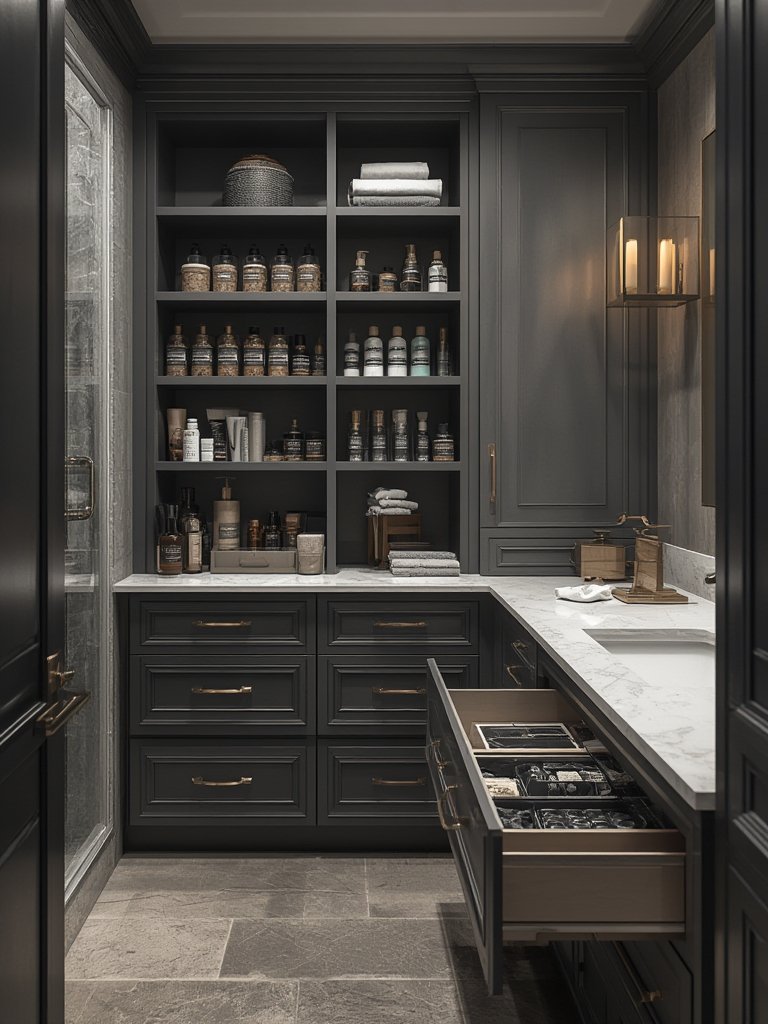
Commercial environments often require antimicrobial and ultra-durable solutions for hundreds of users; for home use, a little customization goes further than chasing the latest trend.
Conclusion
Bathroom clutter is a universal challenge, and a mens bathroom organizer offers no shortcuts specific to gender—but by focusing on practical steps like decluttering, zoning, and customizing with modular storage, you’ll achieve the most organized results for any setup.
For a truly tailored space, revisit your needs regularly, avoid over-engineering with unnecessary gadgets, and don’t get caught chasing branding over real benefit. Want more ways to organize smarter? Dive into our Rubbermaid drawer organizer guide or browse comprehensive product reviews before your next upgrade.
Ready for a functional, stress-free bathroom? Choose your mens bathroom organizer with confidence—then enjoy your mornings clutter-free.
Frequently Asked Questions
Are there actually any bathroom organizers made specifically for men?
No. Market data and product releases in 2024 confirm there are no technical, material, or design features that are truly unique to men, although some brands market in masculine colors or styles. All mainstream organizers focus on universal storage problems (source).
What types of organizers work best in a small men’s bathroom?
Stackable bins, drawer organizers, wall shelves, and over-the-toilet racks are most effective. Go for multifunctional, space-efficient designs that can be customized, especially if you share your bathroom or have limited counter space.
How do I keep my bathroom organizer hygienic if I share with roommates?
Prioritize antimicrobial finishes and labeled bins or caddies. Regularly wipe down surfaces and, if possible, pick organizers that are easy to disassemble for deep cleaning. Some gyms and commercial facilities use touchless storage or antimicrobial plastics for this reason.
Are modular and DIY organizers actually better value?
Yes, generally. Modular and DIY organizers can be rearranged and customized as your needs change, meaning you don’t need to buy a new system every time your space or routine changes. They also fit unusual cabinet or counter dimensions.
Can I use organizers meant for the kitchen, garage, or other spaces?
Absolutely. Many kitchen and garage organizers fit bathroom cabinets or vanities, especially drawer dividers, stackable boxes, and bins. Just watch for non-water-resistant materials if you have high humidity or frequent splashes.