

### Blog Post:
How to install cordless blinds is a skill every homeowner can learn—especially with new safety standards driving massive adoption. Whether you’re upgrading for child and pet safety, a modern look, or hassle-free operation, cordless blinds have become the new norm. Here’s what you need to know for a safe, frustration-free installation you can actually finish in a single afternoon.
Key Takeaways
- WCMA/ANSI standards effective June 2024 mandate cordless blinds for all new window coverings to improve child and pet safety.
- Precise measuring and proper mounting are essential for a level, secure installation—rushing these steps leads to problems.
- Many DIYers overlook bracket placement, leveling, and required tools, which often leads to headaches during installation.
- Cordless Blinds: What Are They and Why Use Them?
- How to Install Cordless Blinds: Step-by-Step Guide
- Advanced Analysis & Common Pitfalls
- Conclusion
- FAQ
Cordless Blinds: What Are They and Why Use Them?
Cordless blinds are window treatments that operate without hanging cords—either by physically tilting/lifting via handle, spring, or a hidden control, or through motorization. With the implementation of new WCMA/ANSI safety standards in June 2024, all newly sold blinds in the US must be cordless to prevent accidents that can happen with dangling cords, especially in homes with children or pets.
But safety is just one reason for their popularity. Cordless systems also offer a cleaner look, easier operation, and compatibility with modern smart home trends that are catching on in nearly 70% of American households. According to market data, automatic and cordless blinds now dominate more than 71% of the market due to these advantages.

How to Install Cordless Blinds: Step-by-Step Guide
Installing cordless blinds is a straightforward process, but it does require accurate measuring, careful bracket placement, and the right tools. Many homes already have cordless blinds, thanks to regulations and growing smart home adoption, but DIY installation can save significant money compared to hiring a pro. Here’s how to do it right:
Required Tools & Materials
- Tape measure
- Pencil
- Level (a spirit level is ideal)
- Drill with drill bits
- Screwdriver (or a cordless drill for faster work)
- Blinds and included mounting hardware (brackets, screws)
- Optional: Wall anchors or drywall anchors if mounting on drywall without studs
Step 1: Decide on an Inside or Outside Mount
Inside mounts fit within the window frame for a streamlined look but require a flat, obstruction-free frame deep enough for the brackets. Outside mounts are affixed above the window, making blinds look larger—handy if window framing is shallow or uneven.
Step 2: Measure Accurately
For inside mount, measure width at the top, center, and bottom inside edges, and height at left, center, and right. Use the narrowest width and longest height. For outside mount, add 2-3 inches of overlap on each side of the window to block more light and enhance privacy.
Step 3: Mark Bracket Placement
Hold the blind’s headrail against the window (inside or above, depending on mount type). Mark bracket positions using a pencil and double-check they’re level. Improper marking is a common reason for crooked blinds and frustrating adjustments later.
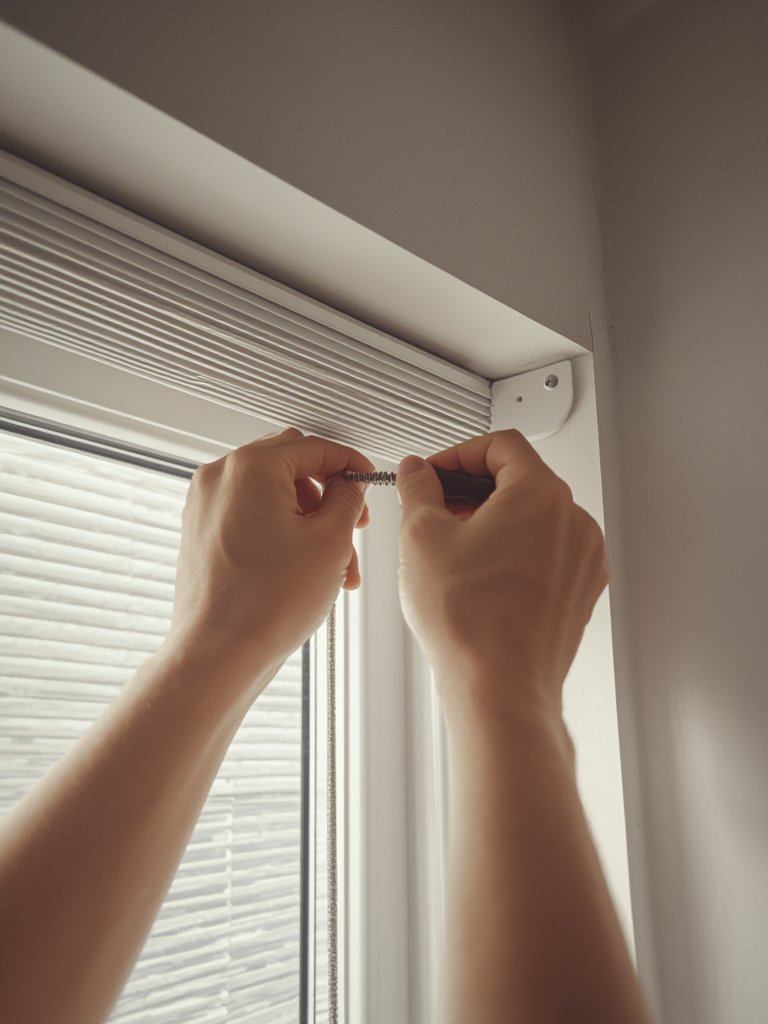
Step 4: Pre-Drill Holes and Install Brackets
Use your drill to make starter holes at the pencil marks. Secure brackets firmly—if mounting into drywall, use the right anchors for added strength.
Step 5: Attach the Headrail
Clip the headrail into the installed brackets by following the instructions provided (most snap in or lock with a latch). Ensure it’s secure—if not, you may need to adjust bracket spacing.
Step 6: Test Operation and Make Final Adjustments
Lower and raise the blind a few times, testing for smooth movement. If the blind isn’t level, loosen the bracket screws slightly, adjust, and retighten until perfectly aligned.
Extra Step for Motorized or Smart Blinds
If you’re installing a motorized system, set up according to manufacturer instructions—usually by pairing with a remote or smart hub. For more on smart home upgrades, see what is a smart home and Nuki smart lock installation guides.
Advanced Analysis & Common Pitfalls
Many aspiring DIYers underestimate cordless blinds installation. Here’s a breakdown of what tends to go wrong—most issues can be avoided by slowing down and double-checking each measurement and bracket alignment.
Common Pitfalls
- Incorrect measurements—Fitting blinds that are too short or wide for the opening leads to light gaps, poor operation, or returns.
- Brackets not level or aligned—Even a minimal tilt can result in one side failing to retract or raise smoothly.
- Improper anchors—Screwing directly into drywall without anchors causes brackets to loosen or pull out over time.
- Headrail not fully seated—If the headrail isn’t snapped in completely, the blind may sag or fall unexpectedly.
- Skipping instructions for motorized options—Smart blinds usually need pairing and calibration before behaving as intended.
| Issue | DIY Impact | How to Avoid |
|---|---|---|
| Incorrect measurements | Poor fit or returns | Use a steel tape, check all three points, deduct 1/4″ if unclear |
| Bracket misalignment | Crooked or jamming blinds | Mark & level before drilling, use painter’s tape to preview placement |
| Weak mounting (no anchors) | Blinds sag or fall | Add drywall anchors if no stud/beam is present |
| Skipping test runs | Problems detected after cleanup | Test operation before tidying tools or discarding packaging |
Cordless blinds aren’t particularly prone to quality complaints or negative user reviews. In fact, as industry research shows, most new issues are user errors—caused by poor prep work, not the blinds themselves. If you do want to avoid common cleaning headaches for pet owners, see our self emptying robot vacuum for pet hair tips, which pairs well with cordless blinds in high-shedding homes.

Conclusion
Cordless blinds are the new safe standard for modern homes—a change driven by WCMA/ANSI mandates to protect kids and pets. With accurate measuring, careful bracket placement, and the right tools and tips, DIYers can confidently master how to install cordless blinds in under an hour per window. Ready to upgrade? Take the plunge, avoid shortcuts, and enjoy your hassle-free window makeover.
Want more home improvement upgrades? Explore our top product picks and recommendations or find inspiration for organic modern kitchen transformations next.
FAQ
Are cordless blinds safer than traditional blinds with cords?
Yes. New WCMA/ANSI standards in 2024 require cordless blinds to eliminate the strangulation risks associated with hanging cords, reducing hazards for children and pets.
How long does it take to install cordless blinds?
Most standard blinds take 30–60 minutes per window if you have the necessary tools on hand and follow measurement best practices. Motorized blinds may take longer due to setup and calibration.
What if my window frame is uneven or shallow?
For shallow or uneven frames, opt for an outside mount. Use anchors for drywall, and measure for extra overlap to ensure light control and privacy.
Can I reuse my old brackets or hardware from corded blinds?
It’s not recommended. Cordless blinds often require specific brackets and spacing. Using incompatible hardware can lead to poor fit and operational issues.
Will I need any special tools?
The basics are a drill, screwdriver, pencil, tape measure, and spirit level. For challenging walls, a plastic drywall anchor kit is also useful.