

How do cordless blinds work? If you want safer, sleeker window coverings, cordless blinds are fast becoming the go-to choice for modern homes. But what actually makes them tick behind the scenes—and are they always better than corded blinds? Let’s break down what’s inside, how you use them, and what you need to know before choosing cordless for your space.
Key Takeaways
- Cordless blinds operate with an internal spring and tension system, allowing you to raise or lower them with a simple push or pull—no dangling cords.
- They’re safer for homes with children or pets, but may require two hands for larger or heavier windows.
- Proper installation and gentle handling are crucial to longevity and smooth operation—resetting or repairs can be trickier than with traditional corded blinds.
- How Cordless Blinds Work: The Core Concept
- Using and Maintaining Cordless Blinds: Step-by-Step Guide
- Advanced Analysis & Common Pitfalls
- Conclusion
- FAQ: How Do Cordless Blinds Work
How Cordless Blinds Work: The Core Concept
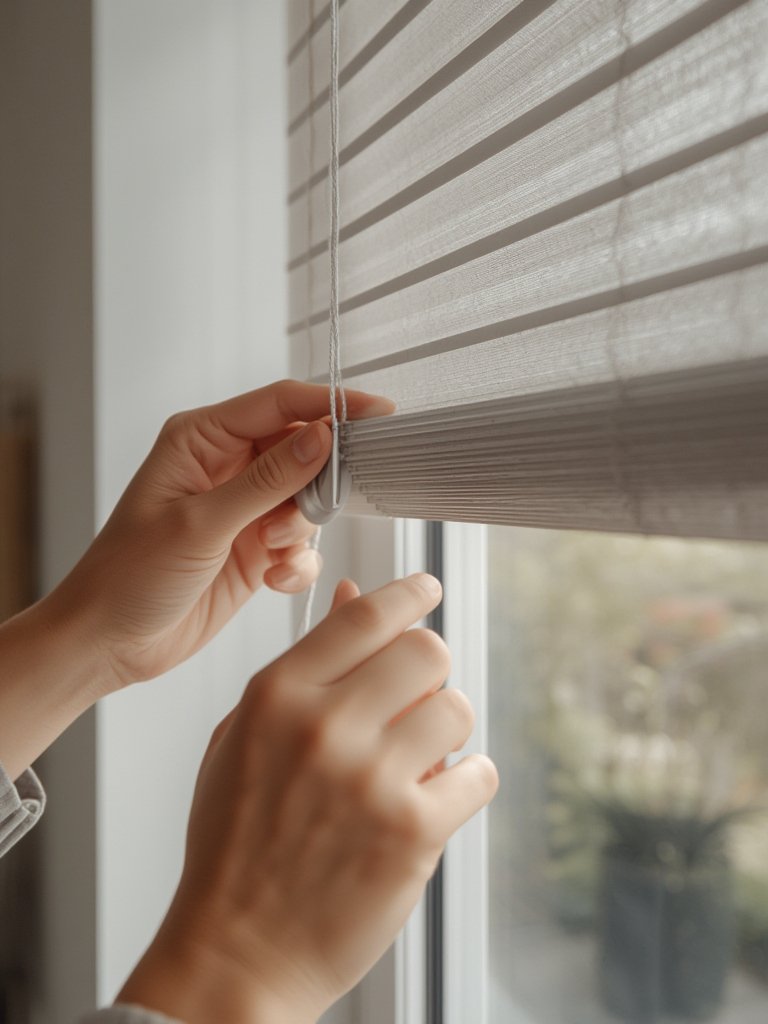
Cordless blinds function using a simple but effective mechanical principle: spring-loaded tension. Instead of pulling an external string or cord, you grasp the bottom rail and gently lift or lower. Inside the headrail, a spring and clutch mechanism absorbs the vertical motion and locks the blind in the desired position. This makes operations smooth, precise, and—most importantly—free of long, tempting cords that can pose strangulation hazards for children and pets.

The “cordless” label is a bit of a misnomer. There are still internal cords, but they are hidden safely inside the blind, working in tandem with the spring system. You’ll find this mechanism in a variety of blind types, including faux wood, aluminum, and fabric cellular shades. Cordless options can also be found in many DIY-friendly window covering kits.
Why go cordless? The main drivers are:
- Safety: Eliminates entanglement risks.
- Clean design: No messy cords to tangle or distract from your décor.
- Ease of use: Simple, one-handed lift or pull for most windows.
Using and Maintaining Cordless Blinds: Step-by-Step Guide
Wondering how to install, use, and keep cordless blinds working smoothly long-term? Here’s a practical, no-nonsense walkthrough:
- Install the mounting brackets and headrail securely. Always follow the manufacturer’s instructions—loose brackets cause sloppy operation and premature failure. For an illustrated, step-by-step installation guide, check out our in-depth cordless blinds install guide.
- To lower the blind: Grip the bottom rail in the center (not at the ends, to maintain even tension) and gently pull down to your desired length. The internal clutch will hold it in place.
- To raise the blind: Again, grasp the bottom rail and push upward. The spring and internal cords retract, lifting the slats smoothly as long as the movement remains straight and even.
- Adjust angle (for Venetian or slatted styles): Use the tilt wand or twist mechanism—many cordless blinds still include this traditional control for tilting the slats.
- Reset if your blinds become uneven or sticky: Pull the blind fully down (to release tension), then raise it back up slowly to reset the spring balance. If this fails, a gentle wiggle or repeating the process can sometimes release a jam.
- Maintenance: Dust or wipe gently—never force the motion if you feel resistance, as repairs are less DIY-friendly than with traditional models. Consult your warranty or a reputable service if the spring mechanism fails entirely.
Side note: Not sure which cordless blind style fits your room’s vibe? See how cordless options work with design-forward trends like the organic modern kitchen aesthetic, or combine them with space-saving upgrades like a custom closet system for a clutter-free finish.
Advanced Analysis & Common Pitfalls
While cordless blinds are highly rated for safety and appearance, some real-world user complaints and drawbacks are important to know before you commit:
- Heavier blinds are harder to lift: Extra-wide or tall cordless blinds (especially in faux wood) may require two hands and more effort to raise/lower. Not ideal for weak grips or mobility issues.
- Mechanism resets can be finicky: If the internal spring loses tension or jams, there’s not always an easy fix—you may need a specialist.
- Limited repair options: Cords on traditional blinds might be replaced at home, but with cordless, most repairs mean disassembling the headrail—something manufacturers warn against due to warranty risks.
- Price premium: Cordless blinds typically cost more than similar corded types. This upfront cost can add up if outfitting an entire house.
- Not all windows compatible: Some specialty window shapes or unusual mounting spots won’t support cordless hardware.
| Feature | Cordless Blinds | Corded Blinds |
|---|---|---|
| Child/Pet Safety | Excellent (no external cords) | Poor (dangling or looped cords) |
| Ease of Lift (Large Windows) | Can be challenging for wide/heavy blinds | Usually easy (pull cord from side) |
| Installation | Slightly more complex, requires exact positioning | Simple, adjustable for fit |
| Maintenance/Repair | Trickier (internal springs) | Usually DIY-friendly (replace a cord or tilt wand) |
| Cost | 10-25% higher average | Lower |
| Look | Sleek, modern, cord-free | Traditional, visible cords |
For most busy households, the added safety and minimalist style is a worthwhile investment. Still, if you’re on a tight budget, or want maximum DIY flexibility, corded blinds may be more cost-effective.
If you struggle to keep dust from settling on your blinds, modern cleaning tools like a ceiling fan blade cleaner also work well on cordless slats, saving extra time.
Looking for coordinated upgrades? Cordless blinds pair well with cordless drills for quick installations and with drawer organizers to keep installation hardware neatly sorted.

Conclusion
Cordless blinds are engineered to offer a safer, streamlined alternative to traditional blinds—and for most families, they deliver genuine convenience. They’re not immune to problems: larger models are harder to operate, and repairs aren’t always simple. But when chosen for the right window and treated with care, they minimize risk and reduce clutter without sacrificing function. Want hands-on installation tips or more help understanding how do cordless blinds work in your specific home? Explore our guides and get the facts before you buy. Ready to upgrade? Start measuring your windows and make safety your priority today.
FAQ: How Do Cordless Blinds Work
Do cordless blinds really have no cords at all?
Externally, no—there are no hanging cords for raising or lowering. Internally, there are cords and springs concealed within the headrail that do the lifting and lowering work.
Are cordless blinds more expensive than regular blinds?
Yes, cordless blinds cost 10-25% more on average due to their specialized mechanism. You pay for safety and a sleek look, but sales promotions or bulk deals can help reduce costs.
What should I do if my cordless blinds get stuck or uneven?
Try gently pulling them all the way down, then pushing up to reset the spring. If this fails, repeated resets may help; otherwise, professional repair is needed.
Do cordless blinds work for very large or heavy windows?
They do—up to a point. very large or heavy windows can be harder to operate smoothly, so check the manufacturer’s specifications and consider whether a motorized or assisted-lift model makes more sense.
Are cordless blinds safer for pets and children?
Yes. With no external cords, the risk of accidental entanglement or choking is much lower, which is why some safety standards now recommend them for all family spaces.