

Looking for a stylish, space-saving way to enrich your cat’s life at home? diy cat wall shelves offer an affordable, totally customizable way to create vertical playgrounds for your feline friends. In this straight-to-the-point guide, you’ll learn exactly what it takes to design, build, and install cat wall shelves yourself—and avoid the all-too-common mistakes that can ruin your investment or put your pets at risk.
Key Takeaways
- Diy cat wall shelves empower you to create climbing spaces tailored for your home and cats—but require careful planning and installation for safety.
- Major pitfalls include improper anchoring, low-grade materials, and not adapting shelf placement to your cat’s agility and room layout.
- Innovations like tool-free mounts, modular design, and reclaimed wood can give your cat’s play zone a unique, decor-friendly boost.
- What Are DIY Cat Wall Shelves and Why Should You Bother?
- How to Build DIY Cat Wall Shelves: Step-by-Step Guide
- Advanced Analysis & Common Pitfalls to Avoid
- Conclusion
- Frequently Asked Questions
What Are DIY Cat Wall Shelves and Why Should You Bother?
DIY cat wall shelves are vertical climbing, perching, and lounging structures you mount on your walls—giving cats safe places to play, nap, observe, and release energy. As more homes shift urban and multi-cat, making the most of vertical space is critical. Cat wall shelves not only save your sofas from scratches, they transform unused wall space into enrichment zones that reduce boredom and boost feline happiness.
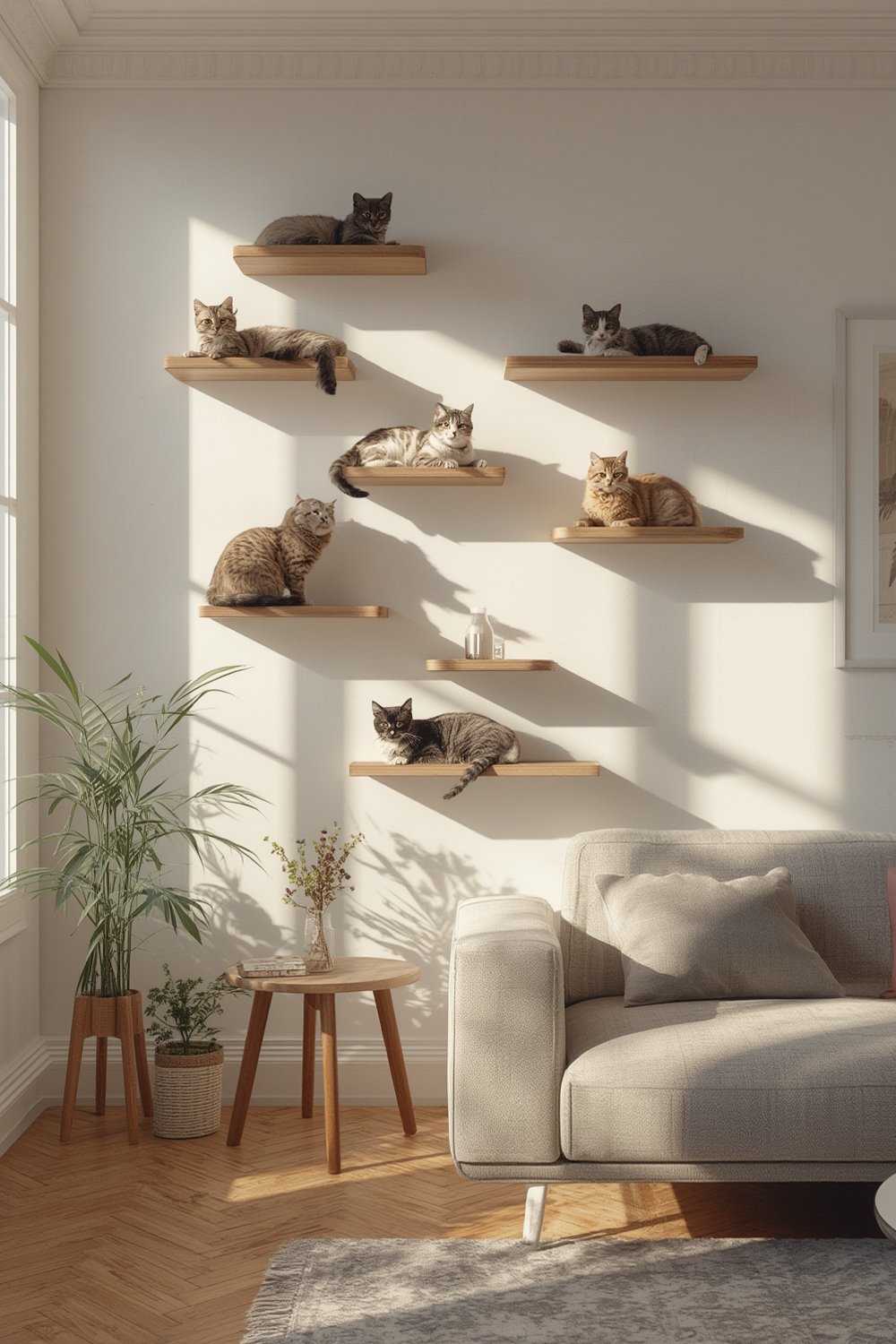
The market is booming: Wall-mounted cat shelves reached USD 1.19 billion in 2024, reflecting growth in cat ownership and the desire for space-efficient enrichment. DIY versions let you personalize the design and finish, often at a lower cost (especially using upcycled wood or reclaimed materials).
Aside from function and cost, building shelves yourself caters to your cat’s personality, weight, and climbing style. It also lets you match the look of your shelves to the rest of your home—think Scandinavian, minimalist, or urban modern. For renters or those in small apartments, customizable modular shelving or tool-free installation techniques avoid wall damage and can be moved or reconfigured as needed.
Looking to keep fur off your furniture too? Consider pairing your project with smart cleaning tools like a self emptying robot vacuum for an easier, cleaner life with cats.
How to Build DIY Cat Wall Shelves: Step-by-Step Guide
Building custom cat wall shelves doesn’t have to be complicated. Here’s a practical guide to planning, buying, and assembling your vertical cat space:
- Plan Your Layout: Sketch your wall and decide on the number/size of shelves. Place shelves 10–14 inches apart vertically for agile cats, 14–18 inches apart for seniors or heavier breeds. Keep at least one shelf reachable by jumping or climbing from a lower platform.
- Choose Materials: For safety, use solid wood (like pine or plywood) or premium MDF at least 3/4″ thick. Avoid particleboard for main supports. Cover surfaces with carpet remnants or felt (felt-lined shelves prevent slipping).
- Cut and Pre-Finish: Sand all edges before finishing for safety. Paint or stain shelves before mounting, choosing finishes that are non-toxic to cats.
- Select and Prep Hardware: Use steel brackets (6″–10″ deep), large wall anchors (rated 50+ lbs each), or tool-free wall clamps for renters. Modular and tool-free shelf supports are trending for easy swaps and fewer holes.
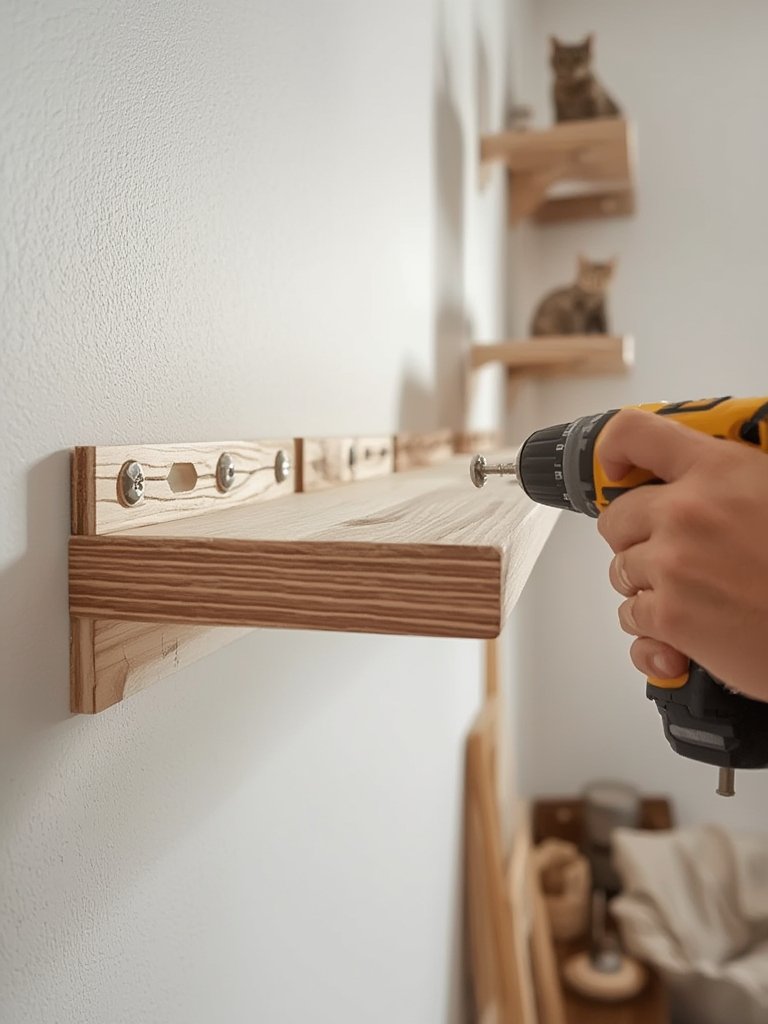
- Install Shelves: Mount brackets into wall studs wherever possible. For drywall-only installs, use toggle bolts rated for the maximum possible cat weight (plus a safety margin).
- Add Extras: Consider integrating vertical scratchers, sisal-wrapped ramps, or hanging toys. For higher shelves, provide a step sequence or corner climbing pillar to make the top shelf safely accessible.
- For small apartments, combine your shelves with clever closet storage ideas to keep the play area tidy without extra furniture.
- Want more DIY efficiency? The right cordless drill will help with accurate screw placement and bracket installation.
While there aren’t published cost breakdowns, expect to spend anywhere from $20–$75 per shelf if buying new lumber and hardware, less if upcycling or reclaiming materials. Always buy rated, robust brackets—cheap hardware puts your pets at risk.
Advanced Analysis & Common Pitfalls to Avoid
Even experienced DIYers run into major trouble with homemade cat wall shelves. Here are the most common (and costly) mistakes:
| Pitfall | What Happens | How to Fix/Avoid |
|---|---|---|
| Anchoring only in drywall | Brackets and shelves can rip out suddenly, risking serious injury and wall damage. | Use wall studs or high-capacity toggle anchors. Test each shelf with double the expected cat weight before allowing feline access. |
| Low quality or thin materials | Board flexes, cracks, or sags—especially with multiple cats or over time. | Never use particleboard. Opt for solid wood or thick MDF as per expert recommendations. |
| Improper spacing | Shelves too close or too far apart frustrate or endanger cats, especially kittens or older pets. | Adjust your spacing for your cat’s age and athleticism—no single rule fits all breeds. |
| Missing traction surface | Cats may slip off painted wood, risk injury, or avoid the shelf altogether. | Glue down carpet squares, felt, sisal rope, or anti-slip material. |
| Ignoring multi-cat dynamics | Shelves too close together or not offering multiple escape routes can cause bullying or stress. | Design with staggered shelves, independent routes, and at least two high perches when possible. |
| Neglecting safety checks | Uninspected screws or brackets loosen over time, risking collapse. | Check shelf stability monthly—retighten fasteners and look for wood warping. |
There’s no universal safety standard—regulations are minimal, so you must be proactive with material choices and mounting. For multi-cat homes, design redundancy and regular maintenance matter more than visual style. If you need extra organization, check out integrated modular shelving approaches like modular shelving units for adaptable layouts.
Some advanced DIYers even integrate eco-friendly, upcycled elements—reclaimed wood, carpet offcuts, or old furniture parts. This not only saves money but results in distinctive shelves that match your décor and keep items out of landfills. According to industry trends, upcycled builds are gaining momentum with design-conscious pet owners.
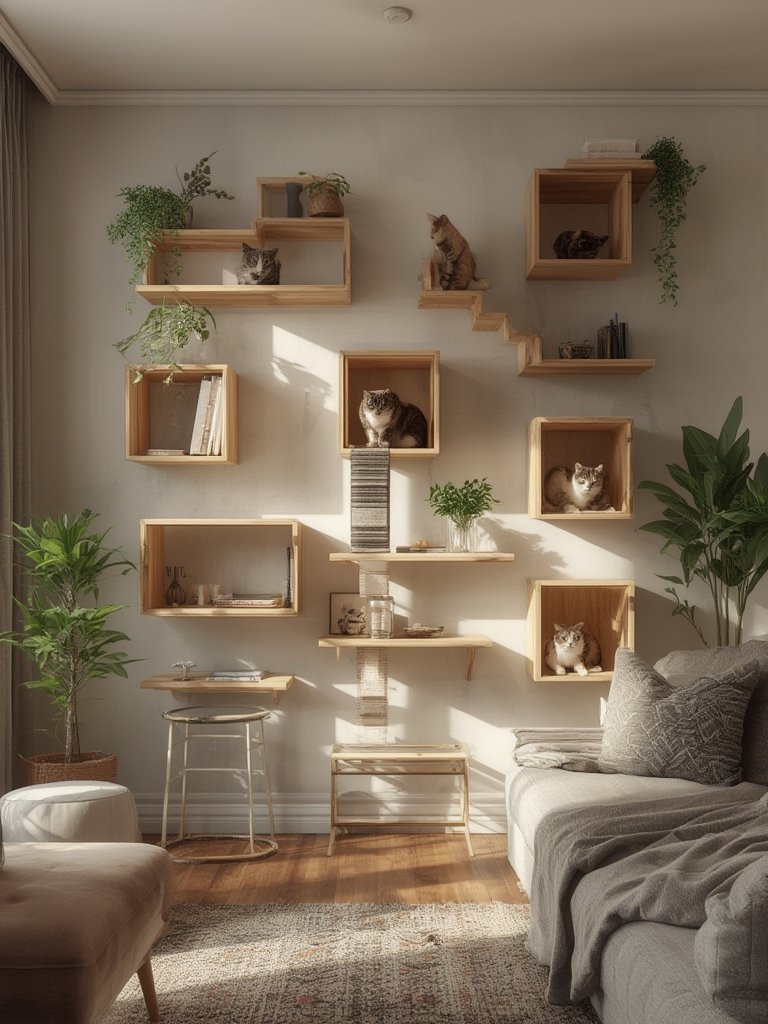
Bottom line: careful planning, solid anchoring, and quality materials matter most. Even innovative designs mean nothing if your shelves aren’t stable and safe.
Conclusion
DIY cat wall shelves allow you to combine creativity, function, and style for a better feline environment—without blowing your budget. Focus on sturdy materials, safe mounting, and flexible layouts that grow with your space or multi-cat family. While the perfect shelf setup takes planning, you’ll see the benefits in happier, more active cats and a home that feels thoughtfully designed for both people and pets. Ready to build your own diy cat wall shelves? Start small, check your anchors, and enjoy the vertical transformation. Don’t forget to explore our top product picks for more inspiration and project support. Your cats will thank you.
Frequently Asked Questions
How far apart should I space diy cat wall shelves?
For most adult cats, 12–16 inches apart vertically is a good guideline. Adjust wider for less athletic or older cats. Always provide a reachable “staircase” or jumping path between shelf levels.
What materials are safest for homemade cat shelves?
Solid wood (like pine, oak, or plywood) and high-quality MDF at least 3/4″ thick are best. Avoid particleboard for structural pieces. Cover the surface with carpet, felt, or sisal for traction and comfort.
Can renters install cat wall shelves without damaging walls?
Yes—some modular and tool-free mounting solutions use pressure mounts or removable adhesives. Just be cautious with adhesives on painted drywall. For true no-damage installation, consider pressure-based shelving or explore Velcro picture hanging strips for trial setups and ultralight platforms.
How do I keep my shelves sturdy for multiple cats or large breeds?
Mount all major brackets into wall studs, use weight-rated hardware, and test each shelf with at least double your max cat weight. For very active or heavy cats, reinforce corners and check for loosening monthly. When in doubt, overbuild instead of underbuilding.
Are there ready-made modular systems if I don’t want to DIY everything?
Absolutely. Many pre-made modular systems are designed for renter-friendliness and easy assembly. You can combine these with custom touches or integrate into broader shelving systems like modular shelving units for more flexibility. Compare reviews before buying, as stability and safety vary by brand.
—