

How to thin latex paint for sprayer is a question that almost every DIY painter and pro faces—get it right, and you’ll enjoy smooth, even coverage. Get it wrong, and you risk clogs, splatters, wasted paint, or even ruining your equipment. This guide covers up-to-date ratios, viscosity tricks, and advanced methods you won’t find in most online articles.
Key Takeaways
- HVLP sprayers need 25–30% thinning for latex paint, while airless sprayers require just 10–15%—always check your manufacturer label first.
- Test viscosity with a #4 Ford cup (target 30–35 seconds for HVLP); always strain latex paint before spraying to avoid clogs and splatter.
- Only use water or Floetrol for thinning latex paint—commercial thinners ruin the paint and can damage equipment.
- Understanding Thinning Latex Paint for Sprayers
- Step-by-Step: How to Thin Latex Paint for a Sprayer
- Advanced Analysis and Common Pitfalls (Plus Solutions)
- Conclusion
- FAQs
Understanding Thinning Latex Paint for Sprayers
Thinning latex paint for a sprayer is about getting the paint to flow smoothly through the gun without clogging, spitting, or causing an uneven finish. Since latex paint is water-based, it is much thicker out of the can than most spray units—especially HVLP and LVLP models—can handle effectively. The right amount of thinning (using water or a paint conditioner like Floetrol) ensures the paint atomizes correctly, giving you a pro-level finish while avoiding most spraying issues.
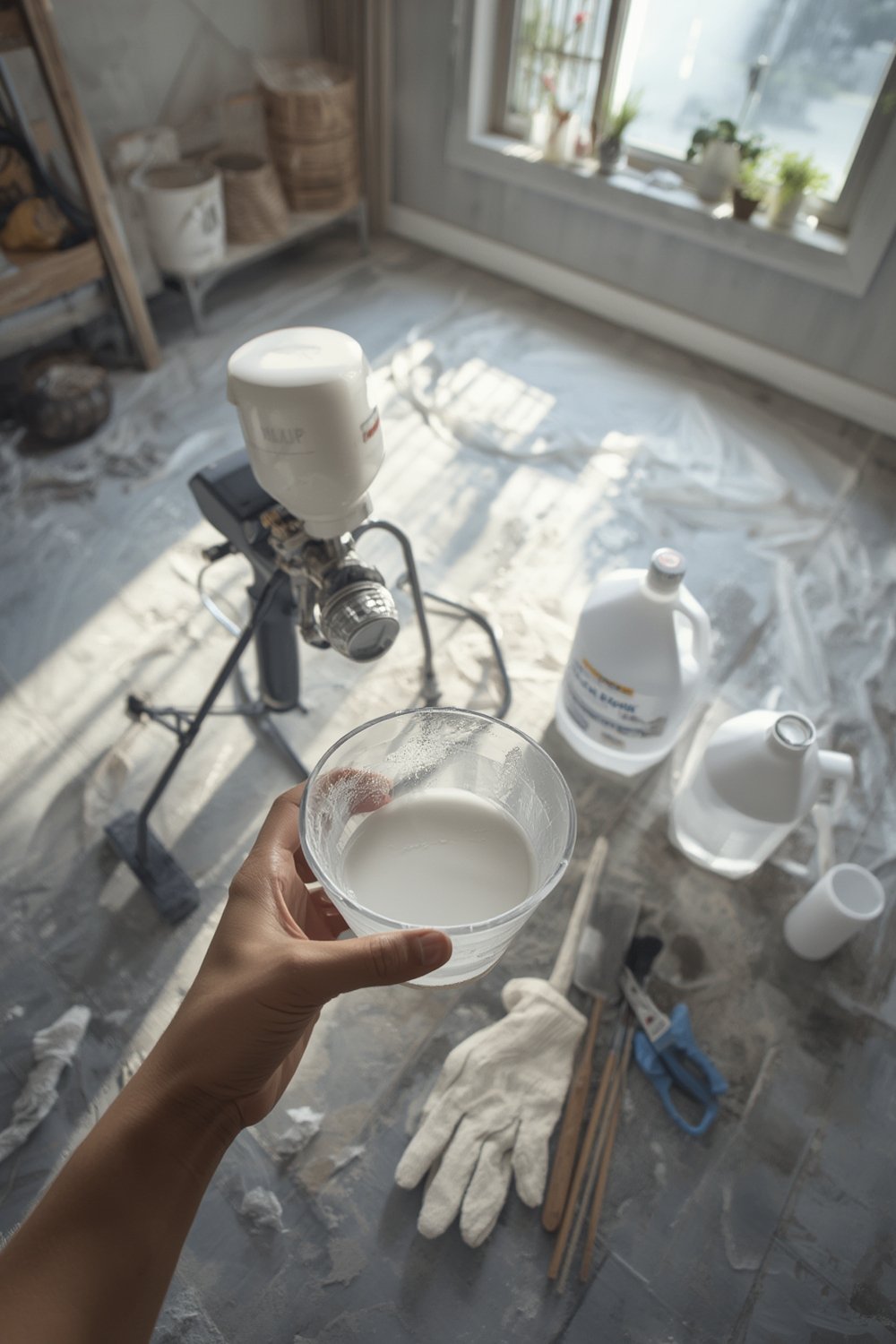
Industry standards in 2024 recommend different thinning ratios depending on the sprayer type:
- HVLP: Usually 25–30% water reduction (aim for a viscosity of 30–35 seconds with a #4 Ford cup). See Paint Life Supply.
- Airless: Only 10–15% is typically needed (about 1/8–1/4 cup water per gallon).
- LVLP: Similar to HVLP (5–20% thinning); begin with less for paint like Benjamin Moore Advance and increase as needed.
Always follow the label instructions from the paint manufacturer first. When in doubt, test on cardboard and adjust slowly—a few percentage points can make a big difference. More on this in the next section.
Step-by-Step: How to Thin Latex Paint for a Sprayer
- Check your paint and equipment. Read the label for thinning limits. Most latex paint can be thinned up to 10% for airless, 25–30% for HVLP, and just a few percent for high-end sprayable latex.
- Gather tools. You’ll need a measuring cup, stir stick, paint strainer (fine mesh or cheesecloth), a #4 Ford viscosity cup (for HVLP), and clean, room-temperature water or Floetrol.
- Prep your workspace. Cover your surfaces and wear gloves and a mask. Proper lighting helps spot coverage errors.
- Stir the paint thoroughly. Latex separates; scrape the bottom and sides. If the paint is old or partially evaporated, it may require more thinning.
- Add thinning agent slowly. For airless: start with 1/8 cup of water per gallon. For HVLP: 1/4 cup per quart paint, increased incrementally until you reach the correct viscosity.
- Mix and rest. Stir the paint, then let it sit for 10–15 minutes—this allows thinning to fully activate. This step is often overlooked but helps achieve uniform consistency.
- Test viscosity. For HVLP, fill a #4 Ford cup and let it drain; aim for 30–35 seconds until stream breaks. For airless, dip a stick—if paint runs in a steady ribbon (not blobs or drips), you’re good.
- Strain the paint. Always run thinned paint through a paint strainer. Even new paint can have lumps, and debris is a leading cause of clogs.
- Test spray. Spray on cardboard or scrap, check for spatters, sags, and coverage. Adjust with tiny amounts of water or Floetrol—never all at once.
- Clean up and limit batch size. Only thin as much as you’ll use in the same day—thinned paint degrades quickly. Clean your sprayer after each use to maintain warranty.
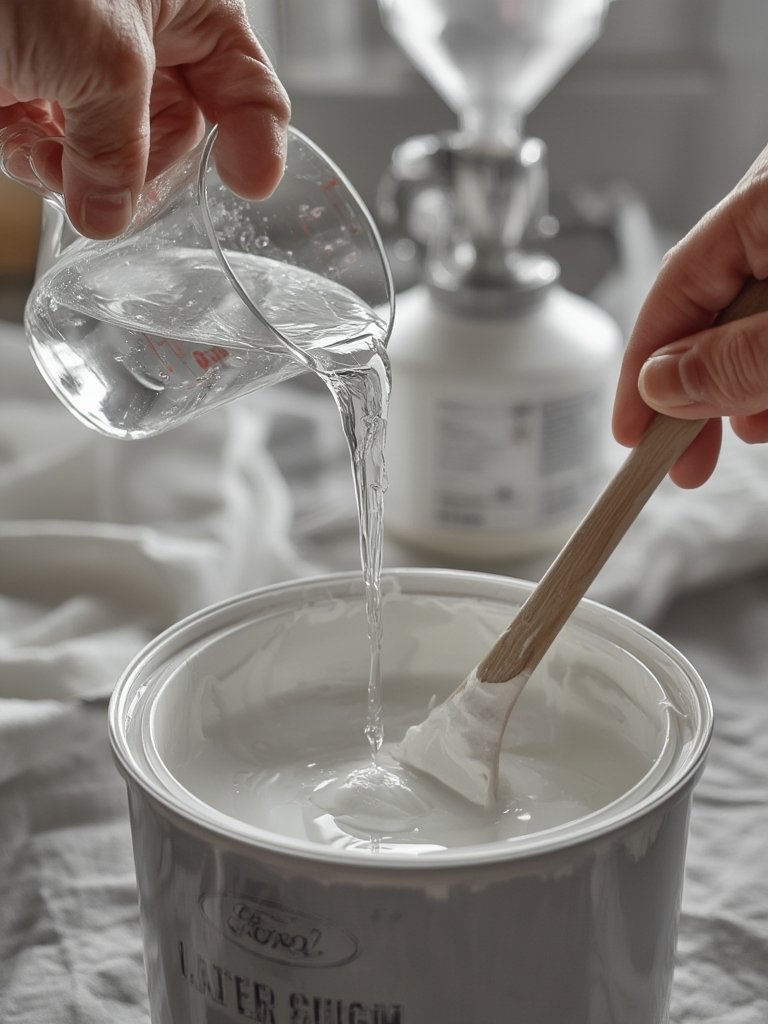
For best results, use distilled water to prevent minerals or bacteria from affecting your finish. Floetrol (up to 25% total) can help reduce brush marks and improve leveling, though it may slightly extend dry times.
Want to improve your workspace? See our garage cabinets buying guide or discover Titan backpack sprayer maintenance tips for pro-level equipment longevity.
Advanced Analysis and Common Pitfalls (Plus Solutions)
Many beginners and even experienced users run into issues the first few times they thin latex paint for their sprayers. Realistic problems and how to address them:
| Problem | What Causes It? | How to Prevent/Fix |
|---|---|---|
| Clogging / Sputtering | Unstrained paint, not thinned enough, debris or old paint. | Always strain the paint. Remediate by adding a tablespoon of water and re-testing. Clean filters frequently. |
| Orange Peel / Uneven Coverage | Paint too thick—doesn’t atomize, especially with HVLP. | Thin incrementally and retest. Adjust air settings if possible. |
| Runs / Sags | Over-thinning; paint loses hiding power and sag resistance. | Thicken with a dash of paint, stir, let sit. Spray thinner coats. |
| Spider Webbing | Improper ratios, especially at high temperatures/humidity. | Thicken paint or reduce thinning. Test spray before scaling up. |
| Color Change | Over-thinning or mixing with incompatible additives. | Stick to water or Floetrol only. Never use mineral spirits for latex. |
| Warranty Issues | Thinning outside manufacturer limits, not straining paint, not following cleaning routines. | Follow label instructions strictly. Keep records of thinning for warranty support. |
Beyond ratios and viscosity: Paint quality degrades after thinning by water, especially if stored. Always mix, strain, and use in the same session. Late in the day? Re-check viscosity; evaporation may thicken your batch while sitting out.
- Best for reliable thin consistency: Water (clean, distilled).
- Best for ultra-smooth finishes: Add Floetrol (a bit pricier but pro-level results).
- Never use commercial / solvent-based thinners—they can ruin latex paint polymers and damage your sprayer.
Want more product hacks? Check our top product picks and recommendations for home tools and accessories.
If this article helps, you might also like our advice on installing drywall anchors and best self-emptying robot vacuums for pet hair.
Conclusion
Thinning latex paint for your sprayer isn’t complicated, but it rewards careful measurement, viscosity testing, and batch-by-batch adjustment. Start with your sprayer type ratio, always strain, and test spray before starting your project. Use clean water or Floetrol—never solvents. Remember: the key to flawless results is to follow the steps, trust your tests, and respect your equipment’s limits. This is how to thin latex paint for sprayer every time, regardless of brand, climate, or project size. Ready for your next project? Tackle it confidently, and share your results or questions with us below.
FAQs
Can I use any water to thin latex paint?
No—always use clean tap or distilled water. Hard water may introduce minerals, and dirty water can ruin the paint’s structure or cause off-colors.
What happens if I over-thin latex paint?
Over-thinned paint can lead to poor coverage (sags, runs), weak hiding power, and possible color changes. If this happens, add more paint to your batch, stir well, and retest viscosity.
Is Floetrol better than water for thinning latex paint?
Floetrol can improve flow and reduce brush marks, resulting in a smoother finish, especially for intricate or large surface spray jobs. Water remains the standard for basic thinning, but Floetrol is preferred for high-gloss or “showpiece” results.
Can I store leftover thinned latex paint?
It’s not recommended. Thinned latex paint spoils quickly, may separate overnight, and will lose viscosity or stickiness for future spraying. Always mix what you need for one session only.
How do I clean my sprayer after using latex paint?
Flush with warm water (or mild, paint-safe detergent for stubborn residue) until the water runs clear. Remove filters and tips and clean separately. Always do this immediately after use to keep your equipment in warranty.