

Entryway mirror ideas can instantly enhance light, depth, and style for any home. Choosing the right mirror is about more than looks—today’s entryway mirrors reflect the latest design trends, improve functionality, and make a memorable first impression the moment someone steps inside.
Key Takeaways
- The top entryway mirror trends are sculptural shapes, durable natural materials, and bold frames for both function and first impressions.
- Size, shape, placement, and installation are critical—get these wrong and you risk poor light flow or a cluttered entryway vibe.
- Durability depends on material choice; hardwood, metal, and stainless steel frames can last decades but require matching to your home’s style and traffic patterns.
- The Core Concept: Why Entryway Mirrors Matter
- Step-by-Step Guide: How to Choose and Install the Best Entryway Mirror
- Advanced Analysis & Common Pitfalls
- Conclusion
- FAQs
The Core Concept: Why Entryway Mirrors Matter
An entryway mirror is more than décor: it’s an essential tool for maximizing daylight, opening up small or dark hallways, and setting the tone for the entire home. Thoughtfully chosen mirrors can create a welcoming effect, especially when trends focus on unique shapes—such as round, arched, or geometric silhouettes—which now appear in over 68% of modern entryways, according to industry research.
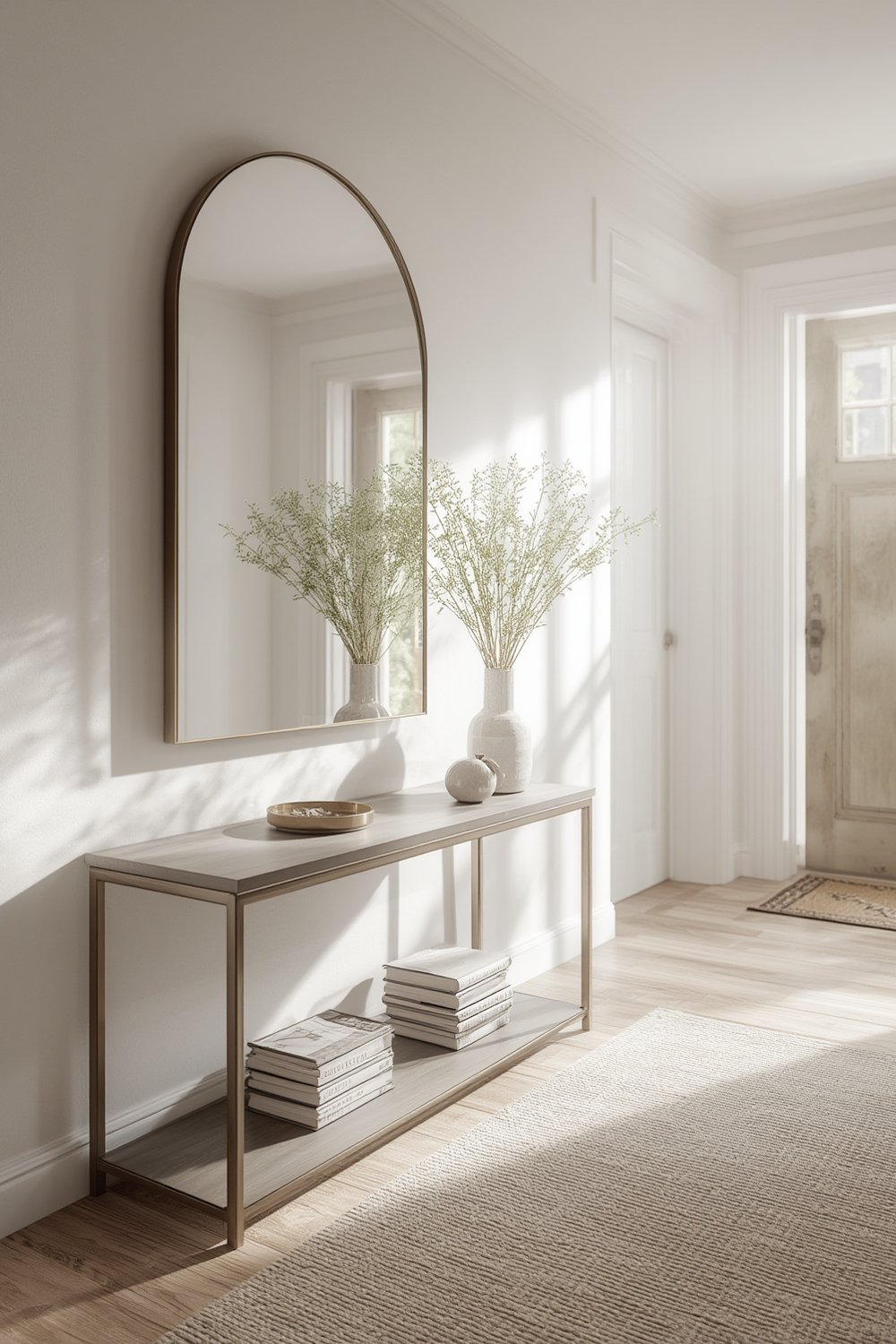
Materials define aesthetics and longevity. Matte-stained oak, brass, black steel, and even rattan or acrylic offer flexible style options that align with most home personalities—from rustic warmth to modern minimalism. Choosing wisely not only enhances space but also boosts durability and maintenance ease—and sets the mood, encouraging light reflection and energy flow from the moment you step inside.
Step-by-Step Guide: How to Choose and Install the Best Entryway Mirror
- Assess Your Space
- Measure your entryway’s width, height, and available wall space.
- Note existing light (natural and overhead) and identify potential glare spots.
- Pick the Right Shape & Style
- For small or narrow spaces, round or oval mirrors offer the most versatile light enhancement and organic flow (more examples here).
- Arched mirrors convey sophistication for traditional or grand entryways.
- Geometric/asymmetrical mirrors create a striking focal point in minimalist or artful homes (see how designers execute this).
- Consider organic or cloudlike shapes if your style leans boho or eclectic.
- Choose Durable Materials & Frame
- Hardwood (oak, walnut): classic, warm, and long-lasting—ideal for high-traffic households.
- Stainless steel: unmatched resilience and water resistance for modern homes.
- Metal/brass: industrial or luxury feel; check for sturdy assembly.
- Woven/wicker: lightweight, textural, and on trend for beachy/coastal.
- Acrylic/glass composite: affordable and lightweight but less durable—suited for low-traffic spaces or budget makeovers.
- Finalize Mirror Size
- For consoles, 2/3 the width of the table keeps proportions balanced.
- Stand-alone? Let your ceiling height guide maximum verticality for dramatic effect.
- Always avoid overcrowding—leave breathing room, especially in small foyers.
- Plan Placement for Function & Light
- Hang at eye level, generally 56-65 inches from the floor to mirror center.
- Pair with wall sconces, table lamps, or floating shelves for enhanced balance and function (trend inspiration).
- Directly across from a window? Maximize light bounce into your home.
- Hang Securely
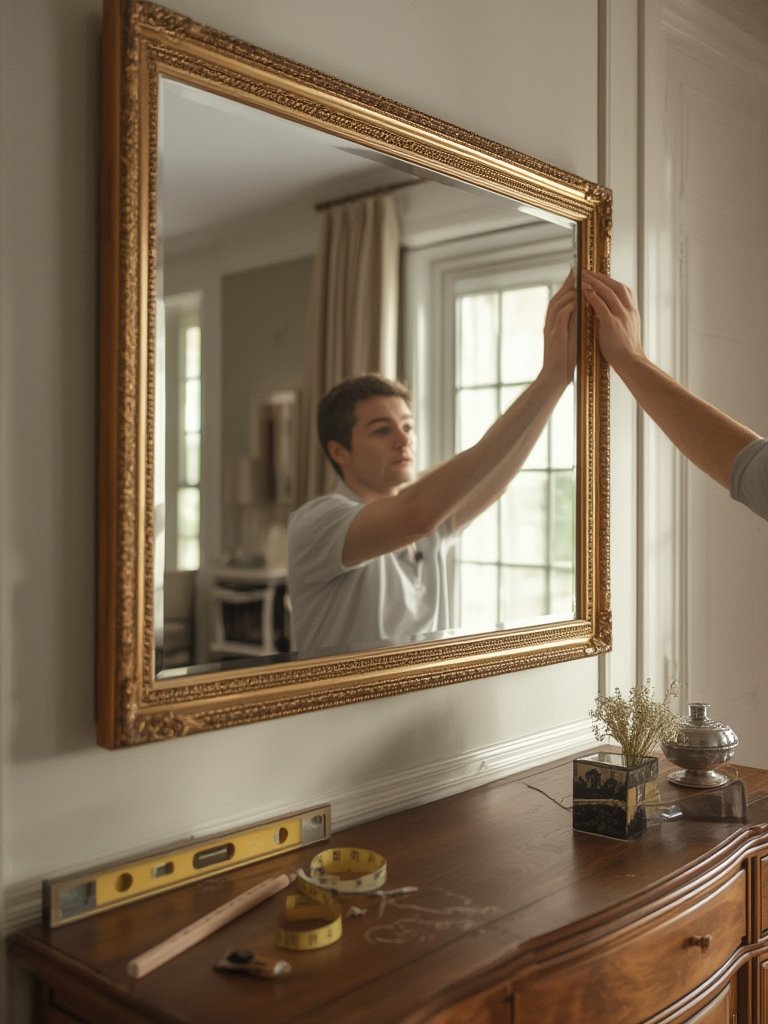
- Use heavy-duty anchors or wall studs—brick, drywall, or plaster may require special hardware (learn about drywall anchors).
- Level your mirror meticulously for symmetry—and triple check before final hanging.
- Complete the Look
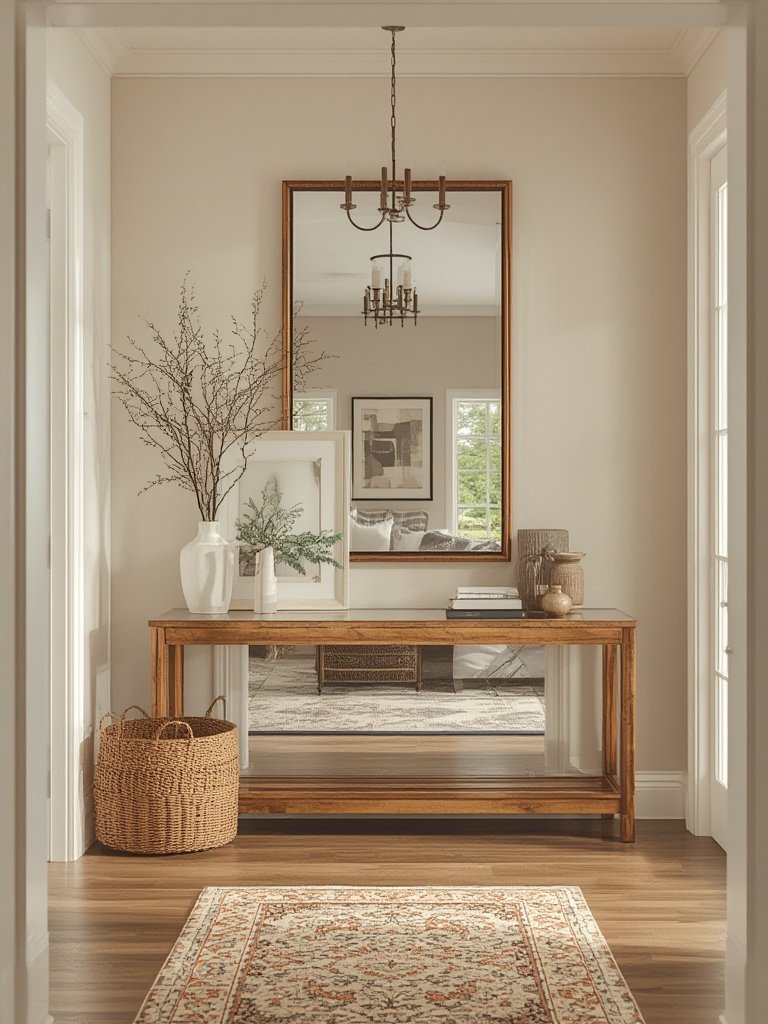
- Add subtle décor: a compact catchall tray, petite vase, or stacking books for instant visual polish.
- Opt for shoe storage benches or coat hooks only if space allows—avoid overcrowding.
- For a full entryway refresh, pair your new mirror with permanent outdoor lights to extend your style to the porch or stoop, or explore an organic modern kitchen for a cohesive, nature-inspired interior flow.
Advanced Analysis & Common Pitfalls
Entryway mirrors can elevate or overwhelm your space, depending on execution. Below is a realistic breakdown of common issues and solutions, so you avoid the mistakes most homeowners make.
| Pitfall | Why It Happens | How to Avoid It |
|---|---|---|
| Mirror Too Small or Too Large | Improperly measured space or ignoring furniture scale. | Measure wall and reference console size—mirror should be 2/3 width of furniture for harmony. |
| Poor Light Reflection | Mirror not placed where it catches daylight or ambient light. | Situate mirror across from a window or under sconces; avoid direct glare angles. |
| Frame or Glass Damage | Using budget acrylic in high-traffic zones or knocking with doors/shoes. | Use hardwood or metal for durability; avoid corners prone to impact if using acrylic/glass composite. |
| Installation Failures | Weak hardware or only one anchor point. | Use appropriate anchors; double-check wall type and use two points for heavy mirrors. |
| Style Mismatch | Choosing a trendy mirror but ignoring the surrounding décor. | Match frame material with hardware or color cues in your space for a unified look. |
Analysis Notes: There is a lack of reliable homeowner feedback on installation struggles like wall damage or sizing regret. When in doubt, consult a professional or use removable mounting to avoid permanent errors. For smart home enthusiasts, note that functional innovations like smart mirrors and built-in storage are not yet mainstream; most innovations focus on aesthetics such as beveled edges, polished finishes, metal-wrapped frames, and woven textures (see design features).
Cost transparency remains a gap—there’s little public data on current average mirror or installation costs. To prevent unexpected expenses, plan for quality mounting hardware, delivery, and touch-up paint as hidden extras.
Looking to combine storage and organization? Consider pairing with a modular storage cabinet near the entryway. For more versatile product picks, visit our curated product review hub.
Conclusion
An entryway mirror makes a functional and stylish first impression when chosen carefully for your space, décor, and lifestyle needs. The right combination of trend-aware shape, long-lasting material, and optimal placement provides more than a decorative boost—it’s a daily quality-of-life upgrade. For a refresh that’s truly you, match your mirror to the story your home wants to tell, and if in doubt, revisit measurement and installation basics.
Ready to transform your foyer? Start planning your entryway mirror project today to enjoy a brighter, more welcoming home in a single afternoon!
FAQs
What is the best shape for an entryway mirror?
Round or oval mirrors are the most universally flattering and trending shapes because they soften space and bounce light evenly. For a bold statement or to match specific architectural features, arched or geometric shapes are ideal.
How high should I hang my entryway mirror?
The center of your mirror should typically be 56-65 inches from the floor for most adults, so the reflection is functional and visually balanced.
Which material lasts longest for an entryway mirror frame?
Stainless steel frames often last 40+ years and are highly resistant to warping or rust. Hardwood and quality brass frames (properly sealed) also offer outstanding durability.
Are smart or storage-integrated entryway mirrors widely available?
While interest is growing, there are currently no mainstream entryway mirrors with integrated storage or smart features. Most innovations are aesthetic such as new frame materials, edges, or textural additions.
How can I hang an entryway mirror without damaging my walls?
For mirrors under 15 pounds, use removable picture hanging strips. For heavier mirrors, use wall anchors designed for your wall type and always check the manufacturer’s installation guidelines.