

Drone power washer solutions are reshaping industrial cleaning—offering unmatched reach, speed, and safety for jobs that once relied on scaffolds, lifts, or costly crews.
Key Takeaways
- Drone power washers dramatically cut cleaning time, labor costs, and safety risks for large-scale industrial jobs.
- Adoption faces hurdles: high upfront costs, regulatory complexity, and variable performance based on equipment type.
- Choosing the right system requires careful review of pressure output, payload, power options, and platform stability.
The Core Concept
Drone power washers are unmanned aerial vehicles designed to deliver targeted, high-pressure cleaning at elevation or in hard-to-reach areas. Their core benefit lies in eliminating the need for scaffolding, lifts, or working at height—reducing operational hazards and labor costs. Companies are adopting drone power washer units for industrial sites, commercial building facades, solar farms, and infrastructure where speed, repeatability, and worker safety are crucial.
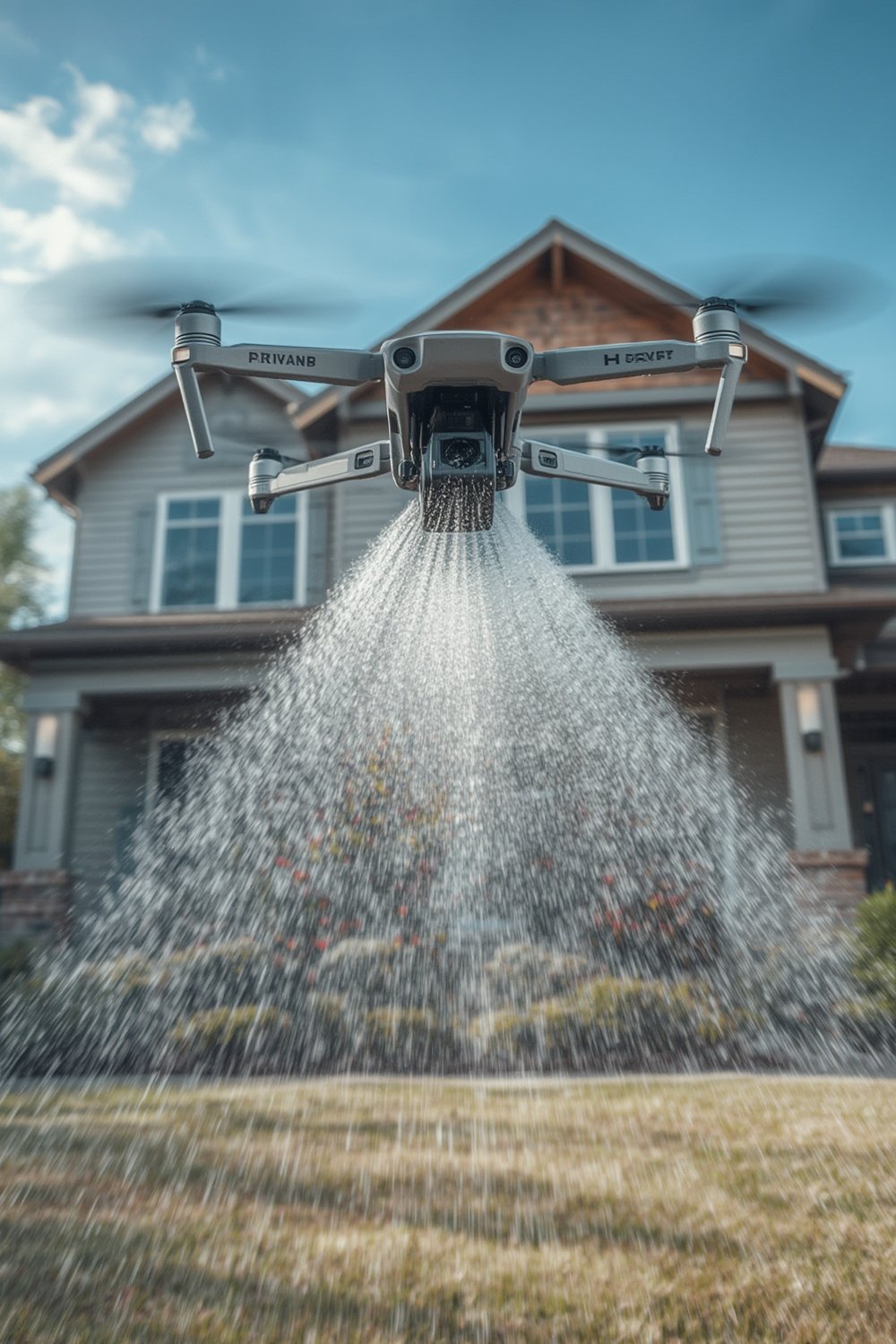
Recent market research forecasts an 18.6% compounded annual growth rate in drone power washers through 2030, with North America leading due to mature regulations and high adoption in cities and solar installations (source). Models like the Apellix Power Wash Drone now feature hybrid power with up to 3,500 psi capability, easily handling tasks traditional teams struggled with—especially delicate surfaces, high windows, and vertical solar arrays.
Step-by-Step Guide
Here’s how professionals can start leveraging drone power washers for industrial cleaning tasks.
- Assess the cleaning site and scope. Identify surface types, access height, and potential hazards. Some jobs may require permission for drone flights, and you’ll often need spotters or on-site visual observers.
- Choose the right drone power washer for the job. For industrial-grade cleaning (concrete, steel, solar panels, tall facades), prioritize high-pressure units with stabilization and at least partial tethering for power or water supply. For residential or soft-wash, battery-only models like the Lucid Sherpa C1 may be suitable—but check battery runtime to avoid frequent swaps.
- Prepare the ground station and crew. Set up power, water feed (if tethered drones), and onboard tanks. Run preflight checks—battery, propellers, pressure lines, data telemetry, and fail-safe systems. Assign roles: pilot, payload operator, observer, and ground support as required.
- Execute cleaning passes. Start with broad, high passes. Use the drone’s AI stabilization and onboard sensors (on newer models) to maintain even distance and coverage. Monitor pressure and adjust on-the-fly for delicate surfaces. Document progress, as cleaning drone telematics often support job logs for insurance or compliance.
- Wrap up and post-flight. Safely land, disconnect power/tether, and clear the LZ. Document results with before/after images and update maintenance logs. Perform required post-flight safety checks: tank lines, battery status, prop integrity, and data download.
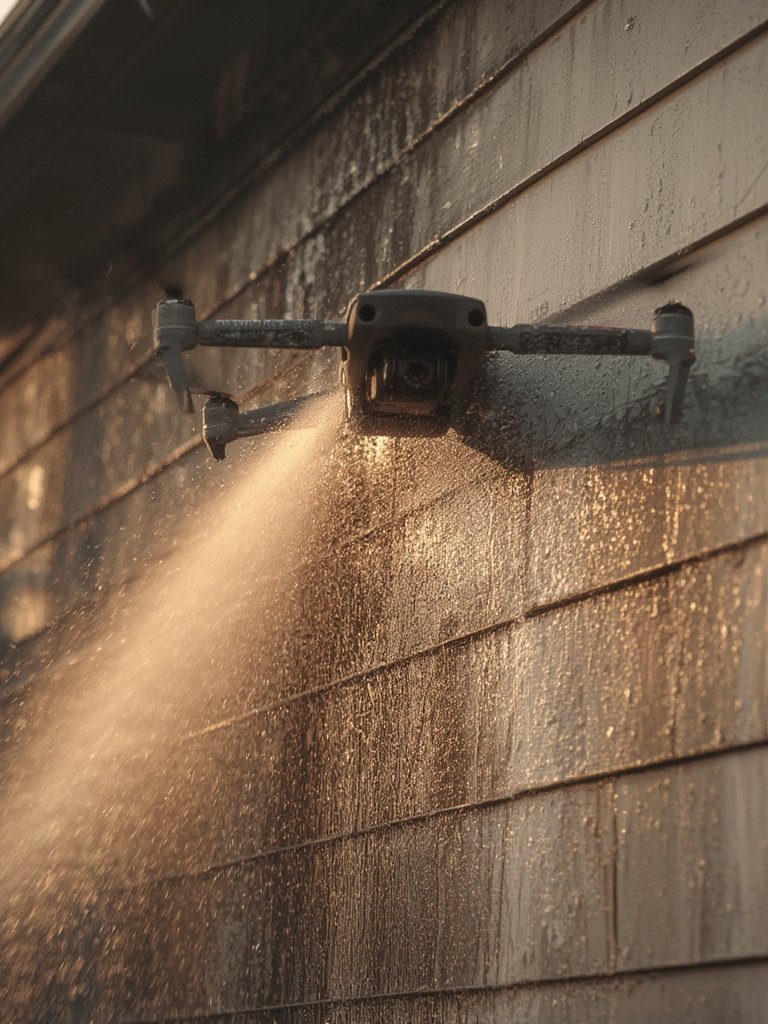
- Routine use of drone power washers can dramatically reduce labor hours—often by more than 60% per large structure (source).
- Consider integrating data analytics platforms for job reporting and predictive maintenance, as offered by next-generation models.
- Explore related time-saving technologies—like self-emptying robot vacuums for pet hair—for broader facility automation.
Advanced Analysis & Common Pitfalls
While drone power washers offer clear benefits, common pitfalls can derail ROI and pose compliance risks. Here’s what thorough market analysis and current user reports reveal:
| Model | Water Pressure (psi) | Payload Capacity | Power System | Price Range | Primary Application |
|---|---|---|---|---|---|
| Apellix Power Wash Drone | 3,500 | 30–50 kg | Tether/battery hybrid | $34,000–$69,000 | Industrial cleaning |
| Lucid Sherpa C1 | 300 | <30 kg | Battery-powered | $35,000–$45,000 | Soft-wash residential/commercial |
| Drone Force USA Custom System | 4,000 | Heavy-lift capacity | Not specified | Not specified | Rooftop solar arrays, vertical facades |
- Regulatory complexity: Airspace restrictions, FAA Part 107 requirements, and local permitting can delay projects or make some sites off-limits. The Drone Force USA system boasts built-in FAA Part 107 compliance (source)—but operators must still do due diligence for each jurisdiction.
- High upfront costs: Even entry models exceed $30,000. While Apellix advertises a 400% ROI after two jobs (source), fast payback assumes high-bid commercial projects and repeat usage.
- Infrastructure and supply: Tethered drones require on-site power/water supply. Long hose runs or inadequate pressure reduce cleaning effectiveness, especially above 100 ft.
- Variable performance: Cheaper battery-only units lack prolonged runtime and may fall short on heavily soiled or elevated industrial surfaces.
- User skill gap: These aren’t “plug and play”—pilots need UAS and cleaning expertise. Under-trained operators risk property damage, regulatory fines, or equipment loss.
- Maintenance surprises: Drones incur regular costs (batteries, pumps, nozzles, sensors) and need periodic overhaul. Plan for downtime and consumables.
Underreported issues—such as quantified safety incidents, battery disposal costs, and fine-grained energy/water consumption comparisons—remain sparse. Always ask for real-world references and failure statistics for any unit under review. Regulatory topics are shifting: many countries adopted new drone operation rules in 2024, so ongoing monitoring is necessary (source).
For those automating other high-effort chores at scale, check out tips on washable tumble rug care or browse product picks and recommendations for facility upgrades.
Conclusion
Drone power washers are transforming how industries and large facilities approach exterior cleaning. With proven ROI, major safety improvements, and rapid advancements in stabilization and AI, these systems are set to make traditional cleaning methods obsolete in many applications. However, regulatory obstacles, high acquisition costs, and the need for skilled pilots remain significant hurdles. Thorough planning, vendor vetting, and compliance checks are essential for maximizing value and avoiding setbacks. If you’re ready to improve efficiency, review your options and invest in the right drone power washer technology for your facility. Have questions or need help evaluating brands? Reach out for expert guidance.
FAQ
How much does a drone power washer cost?
Industrial-grade drone power washers range from $34,000 to $69,000, with specialized models for vertical surfaces sometimes costing more. Residential/soft-wash drones may be available at lower price points but with reduced capability.
Is a drone power washer legal for commercial jobs?
Commercial drone power washer use is legal if the operator has appropriate certifications and all FAA/local permissions. Ensure your drone and pilots comply with regulations such as FAA Part 107 (in the US).
What surfaces can a drone power washer safely clean?
Current systems clean building exteriors, glass facades, rooftops, solar panels, signage, and some infrastructure. Pressure must be adjusted for delicate surfaces. Do not use drones without jobsite and surface assessment.
What are the main maintenance needs?
Routine checks include flight battery health, pump and nozzle performance, hose integrity, and propeller inspection. Tethered systems require more oversight of power/water supplies. Factor in occasional downtime for repairs or upgrades.
Where can I find product comparisons for related cleaning tech?
Review our latest product buying guide and facility automation tech roundups for unbiased comparisons of cleaners, vacuums, air purifiers, and more.