

Acoustic door sweep solutions are often the first upgrade for homeowners struggling with unwanted noise, but their real effectiveness and limitations surprise many. If you need honest, actionable insight on soundproof door sweeps—and how to make them actually work—this breakdown is for you.
Key Takeaways
- Acoustic door sweeps alone only block 0-4 dB of noise; full assemblies with seals and solid-core doors are essential for substantial sound isolation.
- Common pitfalls include poor performance on uneven floors, installation struggles, and limited long-term durability—especially for budget or DIY options.
- To ensure results, choose dense rubber retractable sweeps, prioritize products tested as part of a full door assembly, and don’t overlook room-specific strategies.
- What Is an Acoustic Door Sweep and Why Use One?
- How to Install and Optimize Acoustic Door Sweeps: A Practical Guide
- Real-World Performance: Analysis and What Can Go Wrong
- Conclusion
- FAQ
What Is an Acoustic Door Sweep and Why Use One?
An acoustic door sweep is a barrier attached to the bottom edge of a door, designed to reduce the amount of airborne sound that leaks under the gap. Standard sweeps are often marketed for draft control, but specialized acoustic sweeps use dense rubber or elastomeric seals that press firmly against the floor—sometimes deploying automatically as the door shuts.
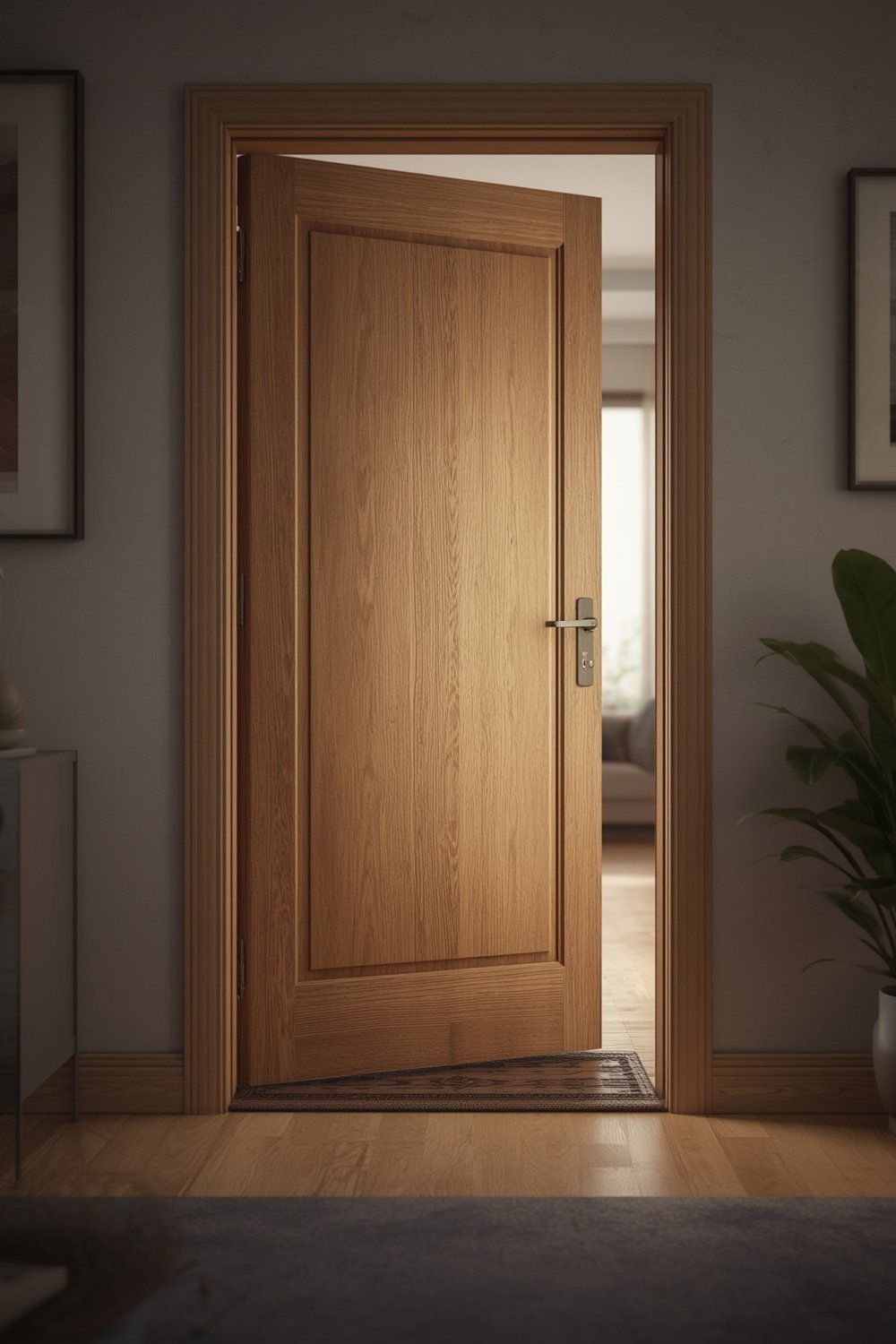
While the core goal is to add an extra layer against noise, independent testing and manufacturer reports consistently show that basic sweeps only reduce noise by about 0-4 decibels—a drop so small it’s often imperceptible in real-world conditions. High-performance sweeps, especially those used with drop-seal assemblies on commercial fire doors, can achieve somewhat better isolation, but significant noise reduction (10+ dB) requires combining sweeps with full perimeter seals and a solid, heavy door.
Put simply: a door sweep helps, but it’s never the whole answer if you’re fighting loud roommates, street sounds, or noisy home offices. Its best use is plugging a last gap in an otherwise well-sealed, rigid door assembly.
How to Install and Optimize Acoustic Door Sweeps: A Practical Guide
Getting the most from an acoustic door sweep is about more than just screwing it to your door. To boost real sound reduction, follow these steps:
- Assess your door type: Solid-core or metal doors offer higher sound ratings (STC 30–35) than hollow-core (STC 20). If your door is hollow, a sweep will do little for actual isolation.
- Choose the right acoustic sweep: Opt for a dense rubber or drop-seal design. Models with automatic or teeter-totter deployment give even floor contact—key for sound block on uneven thresholds.
- Measure for gaps: Confirm the height and width of the under-door gap with a ruler or feeler gauge. Add up to 1/8″ for padding, but avoid sweeps that will drag or wear out quickly.
- Pre-drill holes and dry fit: Mark the install points while the door is closed to guarantee perfect contact. Fix the sweep temporarily and check for light leaks using a flashlight from the opposite side.
- Secure in place: Screw on the sweep with all included fasteners. For drop-seals, adjust tension per the manufacturer’s settings so it deploys when the door closes, yet fully retracts to prevent drag.
- Test and adjust: Open and close multiple times. Look for gaps—if light is coming through, or if the sweep doesn’t touch the floor completely, adjust as needed.
- Combine with full seals: For real noise reduction, add perimeter gasket seals along the frame and attach bottom thresholds or sills if your floor is especially uneven.
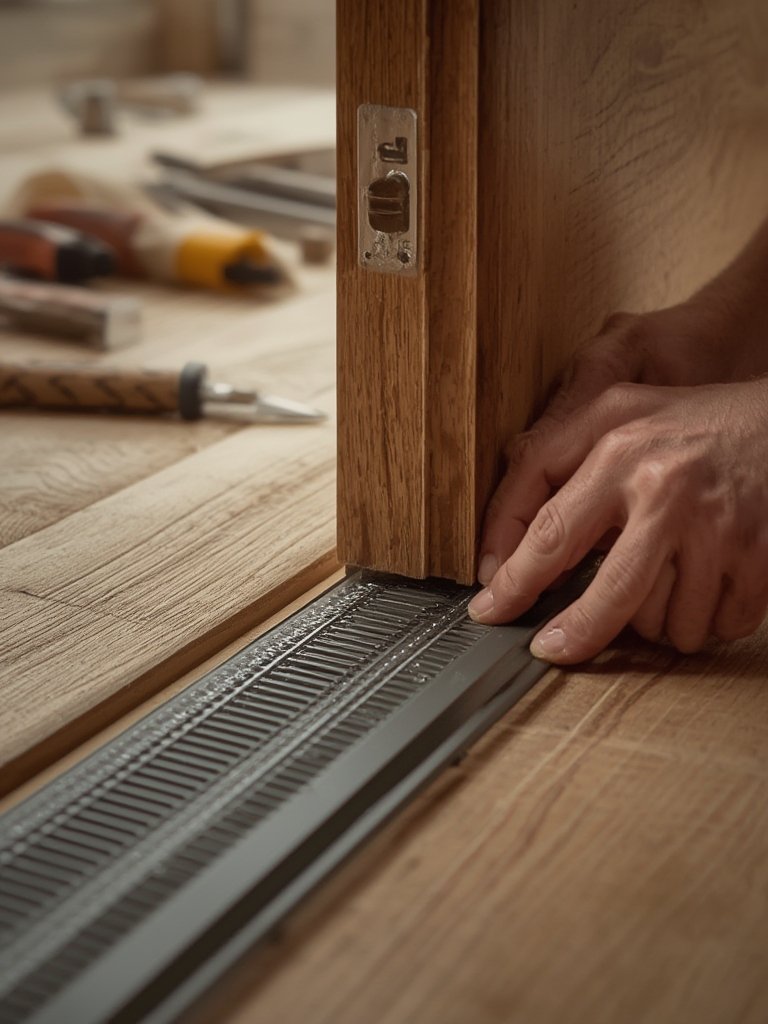
For apartments, consider pairing a sweep upgrade with other renter-friendly fixes. Explore washable floor rugs or even a modular couch near the door to dampen sound reflections. Small changes add up.
Real-World Performance: Analysis and What Can Go Wrong
Despite marketing claims, most home users report only minor improvements after installing an acoustic door sweep. Based on real research and peer feedback, the main issues boil down to:
- Limited noise reduction: Even high-end acoustic sweeps only block about 4 dB alone—barely noticeable with loud voices, TVs, or traffic. True soundproofing comes from combining sweeps with full perimeter seals on a heavy, tightly fitting door.
- Installation challenges: Fixed sweeps require a perfectly level floor for good contact. Any dip or raised area creates a gap—letting noise pass straight through. Retractable models are better, but trickier to fit and more expensive.
- Durability issues: Fabric and cheap rubber sweeps lose flexibility or crack in fluctuating humidity and temperatures, especially near kitchens, bathrooms, or exterior doors.
- Poor performance with hollow-core doors: If your door is lightweight or hollow, adding a sweep will barely help. Consider a full slab or solid-core replacement if noise transfer is a major concern.
| Feature | Standard Door Sweeps | Specialized Acoustic/Soundproof Sweeps |
|---|---|---|
| Materials | Fabric/foam, soft rubber (porous, quickly worn) | Dense rubber, elastomeric fins, automatic drop seals |
| Noise Reduction | 0-2 dB (fabric) 1-4 dB (rubber) |
Up to 6 dB (with full seal assemblies) |
| Floor Adaptation | Fixed—requires level floor | Retractable—adapts to uneven surfaces |
| Durability | Short lifespan; fails quickly with weather changes | Better durability, but costlier and may require tuning |
| Cost (2024, avg.) | $12–$25 (no robust test data available) | $35–$120+ (as part of drop seal kits, assembly tests available) |
Not covered in most competitor articles: How sweeps interact with other soundproofing (e.g., double doors, frame gaps), their long-term wear when exposed to shifting floors or humidity, and how room source noise (like a kitchen vs. office) changes their value. If you want big results, professional consultation—or at least a solid-core door with tested drop seals—is essential. For more on related upgrades, check out our cabinet sound-damping guide and Rockwool insulation tips.
Environmental factors matter, too. If your home is old or the door frame warps with the seasons, sweeps lose their seal and degrade much faster. For renters and frequent movers, look for removable models that don’t require adhesives or permanent holes. And always pair sweeps with the right DIY tools for a stress-free install.
Conclusion
An acoustic door sweep is a helpful but limited tool in soundproofing—alone, it will only shave off a few decibels, barely enough for loud environments. For real peace and quiet, combine your sweep with full perimeter seals, a solid-core or heavy door, and address all air gaps. Prioritize products with tested Rw/STC ratings for their acoustic door sweep performance, and don’t be afraid to invest in professional-grade solutions if noise is a daily struggle. Ready to upgrade? Start with the sweep, then layer strategies for best results.
For more product picks and upgrade guides, see our top product picks and recommendations page.
FAQ
How much noise can an acoustic door sweep really block?
Most acoustic door sweeps alone block only 0–4 dB. When combined with full perimeter seals and a heavy, well-sealed door assembly, total door noise reduction can reach 25–31 dB, but the sweep itself is only one part of that gain.
Do I need professional installation for a soundproof door sweep?
DIY installation is possible, but results depend on getting a perfect seal and the right product fit. Professional installation is recommended for drop-seal or commercial-grade sweeps, especially on uneven or historic floors.
Are brush-type door sweeps effective for soundproofing?
No. Brush sweeps are too porous for true soundproofing. For real noise reduction, opt for dense rubber, elastomeric, or drop-sealing sweeps tested for acoustic assemblies.
Will a sweep help with a hollow-core door?
Only minimally. Hollow-core doors have poor sound reduction ratings (STC ~20), so a sweep will not compensate for thin, hollow construction. Consider upgrading to a solid-core door for significant results.
How do I know if a door sweep is “acoustic-rated”?
Look for sweeps that are part of tested assemblies with published Rw (Weighted Sound Reduction Index) or STC ratings. Avoid sweeps marketed only as “draft blockers” or “weather strips” without any lab-backed noise data.