

### Blog Post:
Kids science experiments at home remain one of the best ways to turn boredom into discovery, spark learning interest, and create memorable moments for families—no fancy supplies or costly kits required.
Key Takeaways
- Most high-impact science experiments for kids use safe, everyday household items—no science degree (or huge mess) required.
- Sticking to age-appropriate activities and supervision tips increases safety and learning outcomes at home.
- Small tweaks, clear instructions, and a bit of prep help avoid common pain points like unclear steps or overwhelming cleanup.
- What Makes Kids Science Experiments at Home So Valuable?
- Step-by-Step Guide: 10 Safe, Affordable Kids Science Experiments at Home
- Advanced Analysis & Common Pitfalls
- Conclusion
- FAQ: Kids Science Experiments at Home
What Makes Kids Science Experiments at Home So Valuable?
Science experiments at home are not just simple time-fillers. They deliver hands-on lessons that spark curiosity, nurture problem-solving, and put scientific concepts within reach for kids of every age. This approach thrives on accessibility—almost all top experiments use typical household items, so there’s no pressure to hunt for rare materials or spend money. Plus, it’s easier than ever to tailor the experience by age or skill level for everything from messy volcanoes to “magic” milk art.
Recent research shows experiential learning like this improves retention and reinforces STEM skills from a young age. Whether your kids are toddlers or school-age, science at home builds confidence in observation, hypothesizing, and testing—all while having fun together.
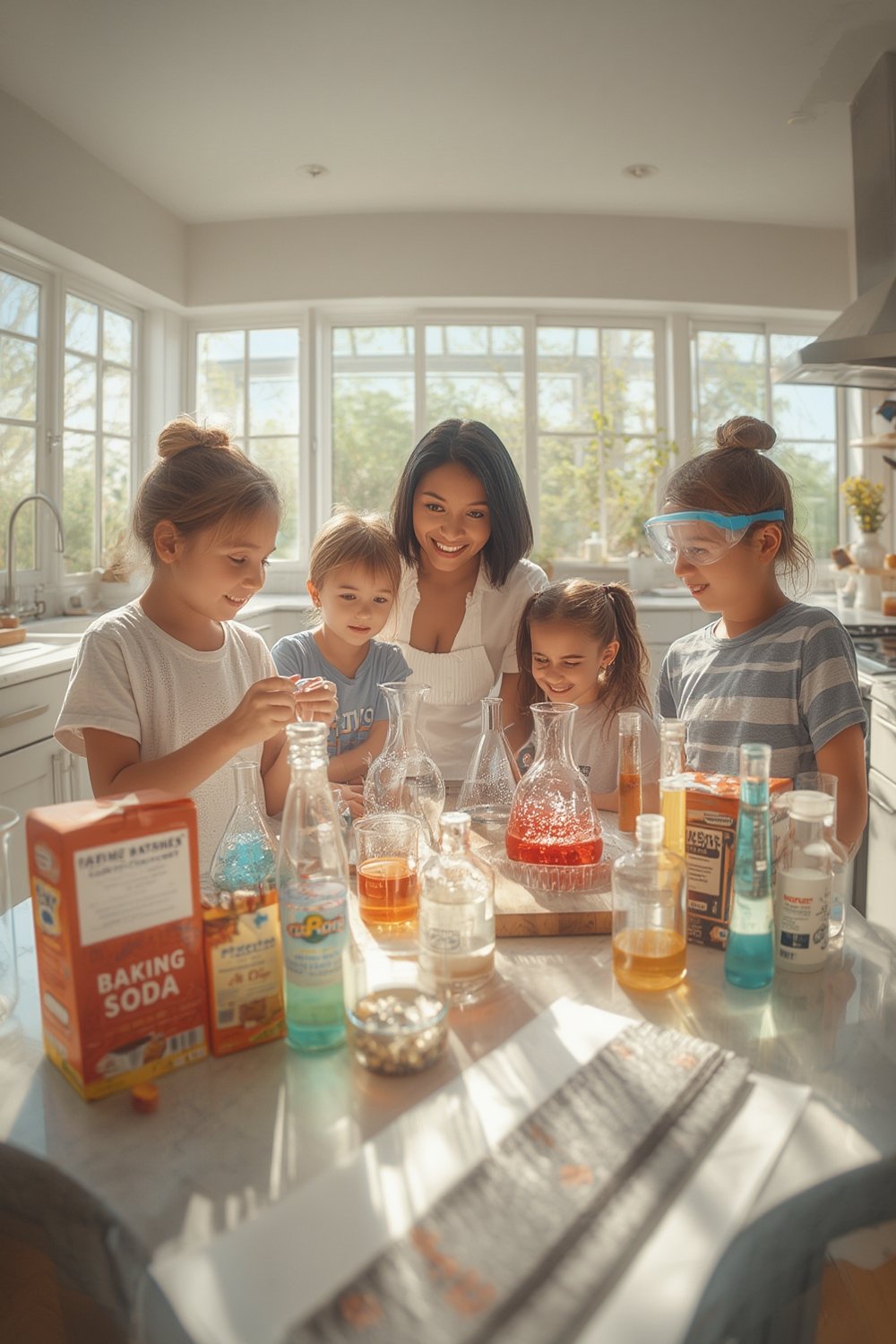
What makes these at-home activities stand out? The best ones:
- Require only easily sourced materials (like baking soda, vinegar, or balloons).
- Are consistently recommended as safe and engaging by educators and parents. [Source]
- Deliver instant, dramatic results that spark questions (think fizzing, floating, lifting colors).
- Are adaptable for different age groups, letting preschoolers and big kids both participate.
Simple prep, step-by-step instructions, and realistic expectations are key to ensuring your science-at-home experience is a success for both adults and kids.
Step-by-Step Guide: 10 Safe, Affordable Kids Science Experiments at Home
Ready to get started with science that actually works (and won’t kill your Saturday)? Here’s how to pull off the 10 most popular and reliable kids science experiments at home, using items you already own—or can grab for a few dollars at the grocery store.
-
Baking Soda & Vinegar Volcano
- Materials: Baking soda, white vinegar, dish soap, food coloring, cup, tray
- Steps: Place cup on tray. Fill with a few spoonfuls of baking soda and a squirt of dish soap. Add a few drops of food coloring. Pour in vinegar and watch the eruption!
- Learn: Chemical reactions, observation, cause-and-effect
-
Balloon Rocket
- Materials: Balloon, string, drinking straw, tape
- Steps: Thread string through straw. Tape one end of string to a wall; the other to a chair across the room. Tape a blown-up balloon (don’t tie it) to the straw, let go—observe its rocket flight.
- Learn: Newton’s Third Law, simple physics
-
Floating Egg
- Materials: Tall glass, water, table salt, egg
- Steps: Fill glass with water, drop in an egg—it will sink. Add salt a spoonful at a time, stirring, until the egg floats.
- Learn: Density and buoyancy
-
Magic Milk
- Materials: Plate or shallow dish, milk, food coloring, dish soap, cotton swab
- Steps: Cover plate with milk, add drops of food coloring. Dip cotton swab in dish soap, then touch to the center—colors move and swirl.
- Learn: Surface tension, color mixing
-
Dancing Raisins
- Materials: Clear glass, club soda or lemon-lime soda, raisins
- Steps: Pour soda into glass, add raisins—watch as bubbles attach and move raisins up and down.
- Learn: Density shifts, carbonation, buoyancy
-
Walking Water
- Materials: 3-6 cups, water, food coloring, paper towels
- Steps: Fill every other cup with colored water. Fold/roll paper towels and bridge dry cups to wet cups. Water will “walk” and blend colors over an hour.
- Learn: Capillary action, color mixing
-
Invisible Ink
- Materials: Lemon juice, cotton swab, white paper, lamp or hair dryer
- Steps: Dip cotton swab in lemon juice, write a secret message. Let dry, then gently heat with lamp or blow dryer to reveal writing.
- Learn: Chemical oxidation, secret codes
-
Homemade Lava Lamp
- Materials: Clear bottle, water, vegetable oil, food coloring, Alka-Seltzer tablet
- Steps: Fill bottle 2/3 with oil, rest with water. Add food coloring. Drop in half a tablet—bubbles and blobs rise and fall.
- Learn: Liquid density, gas release
-
Static Electricity Butterfly
- Materials: Balloon, tissue paper, tape
- Steps: Cut butterfly wings from tissue paper, lay them flat. Blow up balloon, rub on hair to charge. Hold balloon over wings—see them lift and move.
- Learn: Static electricity, attraction and repulsion
-
Sink or Float Test
- Materials: Bowl, water, assorted small household items (spoon, cork, Lego, grape, etc.)
- Steps: Ask child to predict, then test if each object sinks or floats. Discuss what items have in common.
- Learn: States of matter, hypothesis testing
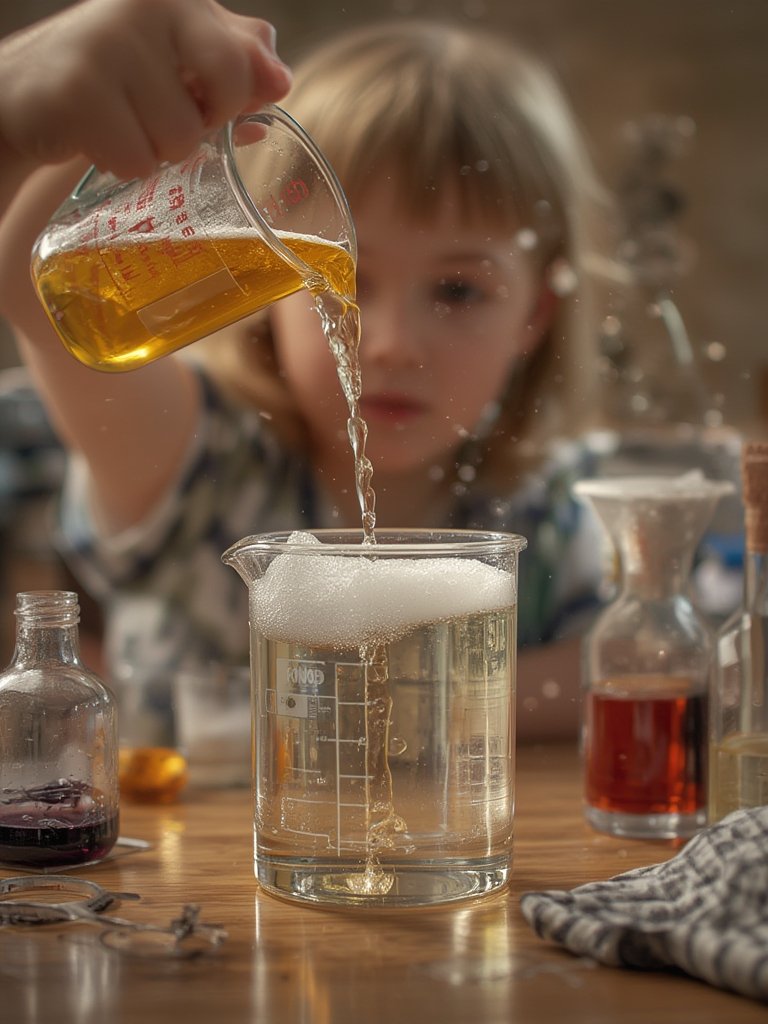
Material Sourcing & Budget: Nearly all materials are found in your kitchen, pantry, or local grocery store (baking soda, vinegar, eggs, balloons, etc.). Average cost: under $5 per experiment, often free if you have items on hand. Need affordable home essentials? See our top product picks and recommendations for budget-friendly finds.
For more ways to minimize hassle during hands-on projects, check out our guide on non toxic air fryer cleanup strategies—a great fit for cooking or chemistry fun that doesn’t involve harsh chemicals or hard-to-clean residue.
Advanced Analysis & Common Pitfalls
Most at-home science activities go smoothly—but knowing common pitfalls increases your odds of real learning (not just sticky countertops or frustrated kids). Here’s what to watch for, plus a quick comparison of top experiment challenges and how to fix them.
| Experiment | Potential Pitfall | Quick Fix |
|---|---|---|
| Baking Soda Volcano | Overflowing ‘lava’, floor mess | Contain in a deep tray, avoid over-pouring vinegar |
| Walking Water | No visible ‘walking’ if towels not touching water | Double-check towel ends reach into colored water and empty cup |
| Magic Milk | Milk won’t swirl if too cold | Let milk sit at room temp for 10 minutes before starting |
| Balloon Rocket | Balloon gets stuck on string or loses air early | Use smooth, taut string and avoid over-inflating the balloon |
| Invisible Ink | Message doesn’t show up | Write thicker letters, ensure paper is fully dry before heating |
| Dancing Raisins | No movement | Use fresh soda with strong bubbles, small/light raisins |
Common complaints and solutions:
- Messiness: Most experiments involve water, color, or fizz. Set up on trays or washable surfaces; keep wipes handy. For carpeted spaces, use a plastic tablecloth.
- Unclear instructions: Kids (and adults) often get frustrated when steps aren’t broken down. Read through your experiment first and rephrase steps in your child’s words. Stick to one experiment per session at first.
Several reputable sites like Little Scholars NYC and MKE With Kids offer step-by-step visuals if you get stuck. - Supervision: Always supervise chemical reactions and make sure no one tries to taste the results. For independent play, choose only non-toxic, non-messy experiments suited to your child’s age.
- Expense: If you’re missing materials, substitute where possible (e.g., any clear soda for club soda, paper or foil for a tray). Avoid specialty “STEM kits” unless you plan multiple experiments.
Want to cut down on unexpected messes throughout your house? Robotic cleaning can help: see our self emptying robot vacuum for an easy cleanup solution—particularly smart for busy families with kids and pets.
Conclusion
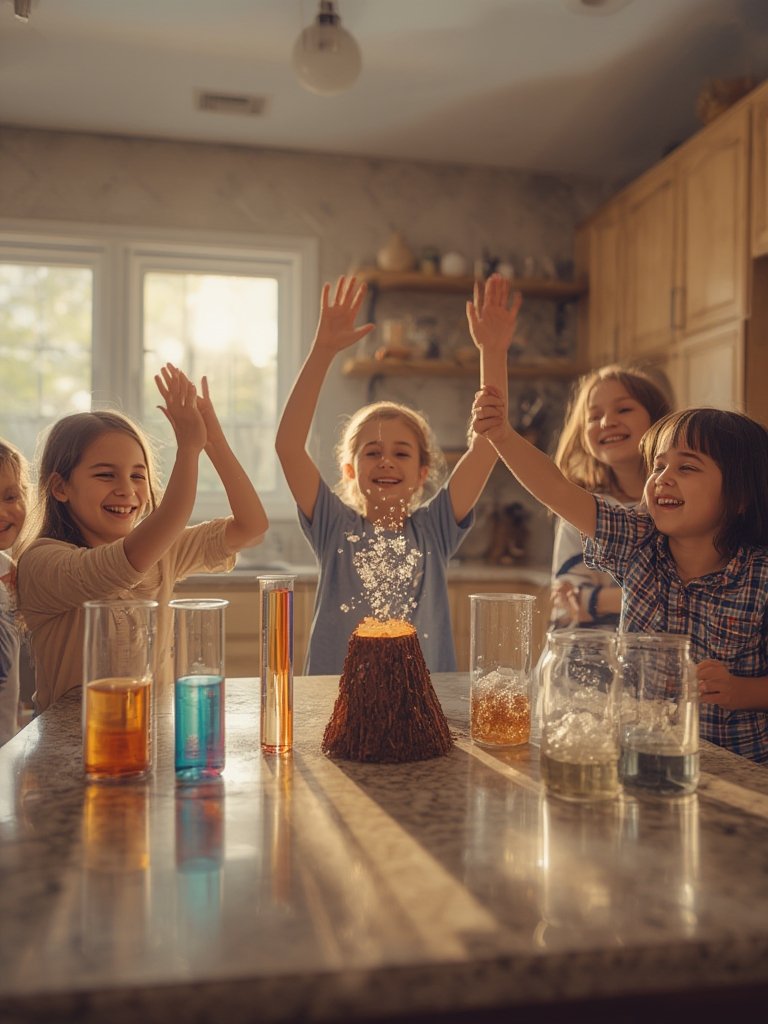
Kids science experiments at home open up real opportunities for hands-on learning, spark curiosity, and build practical skills without breaking the bank. Careful preparation, following clear steps, and setting expectations are the difference between a rewarding science adventure and an “I’ll never do that again” mess. Start with one experiment today—then build your collection as your child’s skills (and curiosity) grow. Want more practical tips for home life, fun, and learning? Browse our top product picks and recommendations or check out creative organizing strategies like how to organize kitchen pantry.
Ready to try your next experiment? Share your results, tweak the steps, and enjoy the journey. You’re building lifelong skills—one kitchen volcano at a time.
Curious about gear or home upgrades to support your science fun? Visit our best home water filters guide or explore solutions for busy families in our resources section.
FAQ: Kids Science Experiments at Home
What age is right for starting home science experiments?
Simple experiments can start as early as age 2-3 with full adult supervision. Choose safe, non-toxic activities for toddlers (like sink or float). School-age kids can try more advanced concepts—always supervise chemical reactions.
How do I minimize the mess during science activities?
Always use a tray, choose washable surfaces, wear old clothes, and keep wipes handy. Prepare everything before you start. Limiting to one experiment per session also helps.
Are these experiments really safe for pets and little siblings?
Most top experiments use common kitchen items and are non-toxic, but always supervise, keep small parts away from babies and pets, and never leave chemical mixtures unattended.
Where can I find more easy science ideas if I run out?
Check sources like Little Scholars NYC, or browse curated home guides and clever project ideas at Hearthside Picks.
Can these experiments be adapted for groups or parties?
Yes! Many experiments (volcano, balloon rocket, magic milk) are great for groups. Set up multiples or run as stations. Just be sure to budget additional time for setup and cleanup.
—